Testing page for app
-
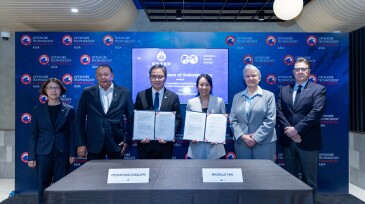
 The ASEAN Council of Petroleum and Energy and SPE have taken a step toward deeper regional collaboration, formalizing a Memorandum of Cooperation at OTC Asia 2026. The agreement signals a shared commitment to advancing energy security, sustainability, and technical excellence across ASEAN through expanded knowledge exchange and workforce development.
 -
The transaction creates a new company, NEO NEXT+, which is now the largest independent producer on the UK Continental Shelf.
-
The department announced it plans to combine the Bureau of Offshore Energy Management and the Bureau of Safety and Environmental Enforcement into the Marine Minerals Administration.
-
Conflict‑driven price gains may be offset by higher costs, supply‑chain risks, and a limited appetite for new drilling activity.
-
While some idle wells may be brought back into production, many will be plugged and abandoned. This paper considers repurposing certain idle oil and gas wells by using their empty steel casing for the disposal of nuclear waste.
-
This article from the SPE Methane Technical Section looks at how, as methane regulation becomes more consequential in global oil and gas trade, operators increasingly need emissions data that can withstand commercial scrutiny, regulatory review, and independent verification.
-
The companies' combined technologies enable real-time control of well placement, hydraulics, and rig operations.
-
In a move tied to national security, a Trump-appointed committee voted to exempt oil and gas drilling in the Gulf of Mexico from Endangered Species Act requirements, marking the first such exemption in 3 decades.
-
PTTEP and SPE formalized a new partnership at OTC Asia 2026 to advance technical knowledge, professional development, and collaboration across the energy sector. The agreement aims to turn global expertise into practical solutions for inspection, maintenance, and asset integrity—key priorities in an evolving industry.
-
CERAWeek panelists see AI as a way to leverage data and people in interpreting data for exploration, but a cultural shift at companies may still be needed.