Testing page for app
-
 The authors of this paper describe a procedure that enables fast reconstruction of the entire production data set with multiple missing sections in different variables.
 -
This paper presents a physics-assisted deep-learning model to facilitate transfer learning in unconventional reservoirs by integrating the complementary strengths of physics-based and data-driven predictive models.
-
The selected list of papers shares some interesting examples to showcase the value added by close collaboration between data scientists and subject-matter experts and how the power of the digital revolution actively revitalizes our industry.
-
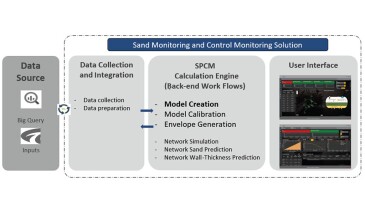
The authors of this paper propose an automated approach to sand prediction and control monitoring that improved operational efficiency by reducing time spent on manual analysis and the decision-making process in a Myanmar field.
-
Each year during its Annual Technical Conference and Exhibition (ATCE), SPE honors members whose outstanding contributions to SPE and the petroleum industry merit special distinction. Recipients will be recognized at the Annual Awards Banquet on Tuesday, 17 October.
-
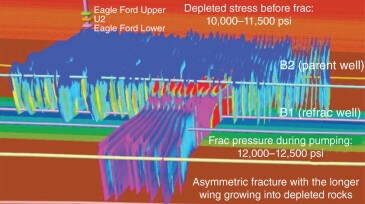
This paper focuses on characterization of fracture hits in the Eagle Ford, methods to predict their effects on production, and mitigation techniques.
-
SPE technical papers synopsized in each monthly issue of JPT are available for download for SPE members for 2 months. These September and October papers are available now.
-
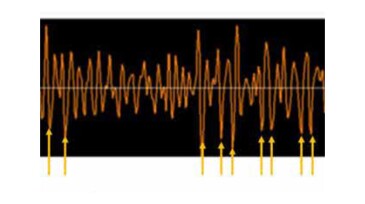
This paper discusses tools and techniques used to localize a tubing leak in a horizontally completed multilateral well, identifying the bore responsible for sand production and providing relative sand quantification at differing flow rates.
-
As production dynamics evolve over the full life cycle of a tight-oil play, a single artificial lift method may not be the most cost-effective solution.
-
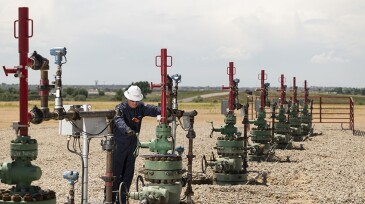
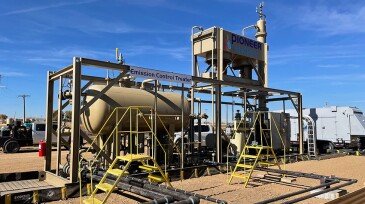
A new type of skid-mounted production facility was deployed on a pad in Weld County, Colorado, and demonstrated elimination of emissions, improved operational efficiency, and an increased crude yield of 11.3%.