Testing page for app
-
 The COVID-19 pandemic naturally has affected SPE meetings, causing many to be rescheduled or postponed indefinitely, but SPE papers continue to be a crucial source of technical knowledge. The selected papers explore simple and complex innovative approaches toward reservoir characterization to work around the absence of certain data.
 -
The authors describe a drilling-systems automation roadmap for a transition from humans to automation in the general drilling space.
-
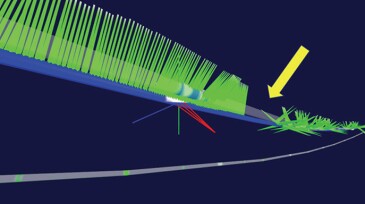
Carbonate reservoirs require effective acid stimulation to improve well productivity. For long horizontal wells, a complicating factor has previously been the difficulty of controlling acid placement along the reservoir section. The Smart Liner concept uses a number of small holes spaced in such a way so as to distribute the acid evenly along the reservoir interval.
-
The authors describe an integrated multiscale data methodology involving machine-leaning tools applied to the Late Jurassic Upper Jubaila formation outcrop data.
-
The authors describe a logging-while-drilling nuclear-magnetic-resonance method applied in Bohai Bay, China, as an alternative to radioactive source-porosity measurements.
-
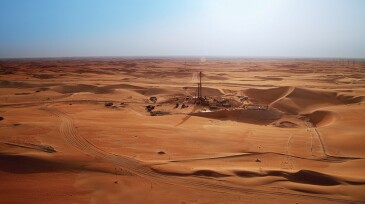
Exploratory, development well success in current onshore program.
-
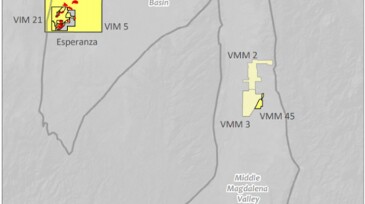
Deal also includes commitment from Eni to drill four wells.
-
The study assessed the CO2 footprint and NO2 emissions for different drill-cuttings treatment alternatives. The values were then used to create an emissions calculator that can be applied to projects to clarify the actual potential for emissions reduction within the drilling-waste-management process.
-
The authors develop a collocated finite-volume method to study induced seismicity as a result of pore-pressure fluctuations.
-
The authors determine that economical and environmentally responsible solutions exist for fluid disposal during well-testing operations.