Testing page for app
-
 The papers summarized in this year’s feature demonstrate the application and versatility of coiled-tubing-based solutions to different phases of a well’s lifecycle, from exploration through production and, finally, to abandonment.
 -
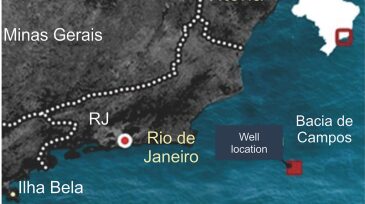
The complete paper discusses the systematic approach adopted by a service company to achieve the goal of safely abandoning wells offshore southwest Brazil with different completion types using light workover vessels.
-
This paper describes a coiled tubing gas lift (CTGL) technique successfully used to restart production from two pilot wells in a mature field in Pakistan that had been shut in since 2015.
-
The complete paper discusses a method of stimulating deep, high-temperature offshore wells by combining an efficient single-phase retarded acid (SPRA) system and an engineered, degradable, large-sized particulate and fiber-laden diverter (LPFD).
-
Several well-stimulation products and techniques have been seen to benefit well productivity from recent field trials and implementations in carbonate reservoirs, including simpler acid fluid systems, integrated work flows, and coiled-tubing bottomhole assemblies.
-
In the complete paper, the inverse-injectivity method of evaluating matrix-stimulation performance is modified and validated with real data of two matrix-acidizing operations in a gas-condensate field.
-
The complete paper discusses an advanced matrix-stimulation work flow that brings reliability and flexibility to the acidizing of tight carbonate water injectors and has delivered injectivity improvements tight carbonate onshore reservoirs in the Middle East.
-
In the complete paper, the authors derive a novel analytical solution to model the temperature signal associated with the shut-in during flowback and production periods.
-
A new real-time-visualization (RTV) technology combined with high-resolution pressure reading and acoustic sensors is being used to overcome operational difficulties and to optimize stimulation efforts by reducing uncertainty.
-
The complete paper demonstrates the benefits of honoring data measurements from a multitude of potential sources to help engineers do a better job of including more diagnostics into routine operations to provide additional insight and result in improved models and completion designs.