Testing page for app
-
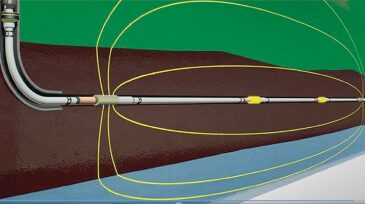
 In this paper, the authors introduce a new technology installed permanently on the well completion and addressed to real-time reservoir fluid mapping through time-lapse electromagnetic tomography during production or injection.
 -
This paper discusses a prescriptive analytics framework to optimize completions in the Permian Basin.
-
Proper lateral and vertical well spacing is critical for efficient development of unconventional reservoirs. Much research has focused on lateral well spacing but little on vertical spacing, which is challenging for stacked-bench plays such as the Permian Basin.
-
Reviewing a myriad of papers presented at different conferences during the past year, I can group the current trends in heavy-oil operations and research into two major categories: Process optimization and use of chemicals as additives to steam and water.
-
Steam-assisted gravity drainage (SAGD) performance in bitumen-recovery projects in Alberta is affected by geological deposits, reservoir quality, and operational experience.
-
Although polymer flooding has become a promising enhanced oil recovery (EOR) technique, no field tests have been performed to date in Alaska’s underdeveloped heavy-oil reservoirs.
-
Most history-matching studies have fixed resources—that is, the team of engineers and geoscientists is predetermined. Moreover, the deadlines are always very strict. This constrained scenario often leads to an unfortunate result: The quality of the study suffers.
-
The complete paper describes piloting the collection and analysis of distributed temperature and acoustic sensing (DTS and DAS, respectively) data to characterize flow-control-device (FCD) performance and help improve understanding of steam-assisted gravity drainage (SAGD) inflow distribution.
-
The industry increasingly relies on forecasts from reservoir models for reservoir management and decision making. However, because forecasts from reservoir models carry large uncertainties, calibrating them as soon as data come in is crucial.
-
The results of the authors’ research showed promising benefits from the use of a systematic procedure of model diagnostics, model improvement, and model-error quantification during data assimilations.