Testing page for app
-
 Eleven reviewers joined the elite ranks of A Peer Apart by reviewing more than 100 papers for SPE, and 3 technical editors are recognized for their efforts during 2014.
-
Low-salinity waterflooding has recently attracted considerable interest from governments, researchers, and oil companies, who are evaluating the method’s potential to increase oil recovery.
-
To estimate reserves, optimize well recovery, and place future development wells more accurately, operators require increasingly detailed understanding of complex oil and gas reservoirs.
-
In response to the 2010 Deepwater Horizon incident that claimed the lives of 11 men and led to the worst oil spill in United States history, the offshore industry devised new technologies and methods that would allow for a quicker response in the US Gulf of Mexico.
-
Saudi Aramco’s plan to create a global network of research centers is becoming a reality. It recently celebrated the opening of its Houston center that the company’s President and Chief Executive Officer Khalid Al-Falih described as “an upstream research center like no other.”
-
Making hole has become a more difficult and complex operation as operators move into untapped horizons, especially deepwater and unconventional fields.
-
In April, downhole chemical technology provider Flotek Industries acquired water-based, drilling fluid-additive technology from ARC Drilling Fluids.
-
Almost every aspect of modern society is supported or influenced by energy—and yet it is one of the least understood and possibly one of the most reviled industries on the planet.
-
Petroleum industry professionals reported an average total compensation of USD 214,328 in 2014, compared with 203,557 in 2013 and 223,472 in 2012.
-
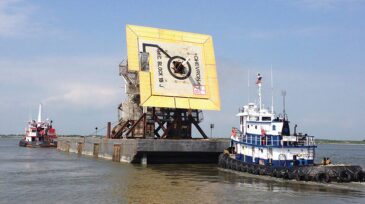
A strong reason for removing old platforms from the Gulf of Mexico, rather than trying to squeeze more years of marginal production out of them, is hurricanes.