Testing page for app
-
 Fiber optic pressure and temperature (P/T) sensing technology for multizone fracturing and production monitoring is enabled by a new feed-through (FT) technology that integrates the optical fiber within the multiple elastomer elements of a compact, swellable openhole packer system.
-
In this third column on emerging geographic frontiers, I want to focus on what may be the fastest developing country in the Eastern Hemisphere—politically, demographically, and certainly from the standpoint of upstream oil and gas.
-
Asia Pacific’s energy sector is on the brink of major change. New areas are opening to foreign investment, national oil companies are adopting more aggressive E&P strategies, and the supply/demand balance is shifting.
-
The use of moored, oceangoing “smart” buoys that can harvest energy from waves could be an efficient and economic means of supplying electric power for various offshore oil and gas operations, including well trees, monitoring systems, and autonomous underwater vehicles.
-
The world's first full-scale subsea gas compression system is the final stages of construction and is on schedule to be installed in the Åsgard gas field offshore Norway by year's end.
-
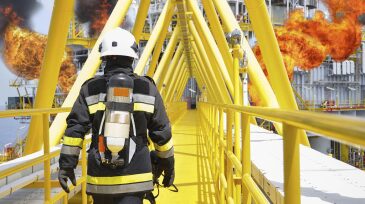
Passive fire protection (PFP) has been used as a method to avoid/delay global collapse of offshore installations. Location of PFP is often based on simplistic assumptions, standards, guidance, and methods that do not always consider the real response of the structure to fire.
-
This month's papers cover application of multiphase pumps in developing marginal deepwater fields, passive fire protection needs, simulation of gas pipeline networks, and novel technologies for increasing the energy efficiency of offshore facilities.
-
Vibration-induced fatigue failures of pipework smallbore connections result in elevated safety risks and costly interruptions to normal operations. A common cause is poor design. This article discusses design considerations to avoid these failures.
-
The demands for the fresh water used in many hydraulic fracturing operations are placing pressure on water sources in some regions of the United States. Because of the high volumes of water needed for fracturing and competing demands availability of fresh water has decreased and costs have grown.
-
Technical Sections for Facilities Engineers and Thoughts on Modular Production Facilities ComponentsCould virtual technical communities and modular facilities be the future of oil and gas?