Testing page for app
-
 The complete paper presents a large-scale work flow designed to take a vast amount of data into consideration. The work flow can be scaled for projects of any size, depending on the data available.
 -
An opportunity now exists to further develop the way we solve problems by adopting agile work flows. Originating from software development in 2001, agile work flows will be a key part of driving the oil and gas industry to its next level of efficiency.
-
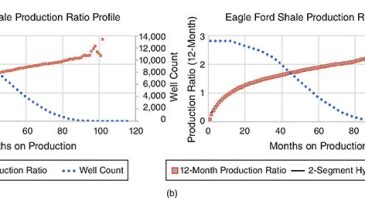
The complete paper discusses the use of cumulative production ratio curves normalized to a given reference volume in time for different unconventional plays in North America to investigate the median trend for each play and the median ultimate recovery per play.
-
In tectonically influenced regions, potential hydrocarbon traps are subject to complex states of stress. This scenario often translates into severe strike/slip (SS) and thrust-fault or reverse-fault (TF/RF) stress states.
-
This paper presents novel approaches to carbon abatement using petroleum that have a strong chance to succeed in fulfilling technological and economic goals.
-
What the industry needs at this stage is a willingness to work together, share best practices, conduct innovative research, and focus on disruptive technologies that lower cost of capture and make our operations more sustainable.
-
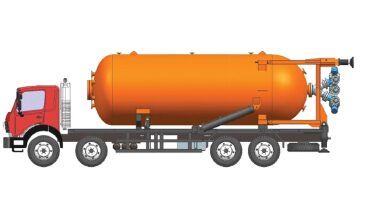
Carbon dioxide (CO2) waterless fracturing uses liquid CO2 to replace water as the fracturing fluid in reservoir stimulation. The continuity and reliability of the blender are key factors determining performance of the operation.
-
The complete paper describes an advanced Rankine cycle process-based system that converts waste heat into usable electrical power to improve the efficiency of gas-compression stations on gas-production platforms and pipelines.
-
Each year at the SPE Artificial Lift Conference and Exhibition, energy professionals convene to connect, grow, and learn—and also to laud outstanding innovators in their field.
-
With their gee-whiz—albeit artificial—intelligence, robots may be the industry’s answer to jobs deemed dangerous, dirty, distant, or dull.