Testing page for app
-
 As operators and asset owners worked continually to increase efficiency in oil production, they all realized that part of efficiency improvement is increasing recovery factors. Everybody now is extremely focused on recovering more from the reservoirs they have.
-
This paper provides a robust methodology for miscible CO2 WAG experimental-data acquisition and history matching.
-
This paper describes a case study of the Chonskaya group of fields to demonstrate an approach to the integration of time-domain-electromagnetic (TDEM) electrical and seismic data when building a geological model for improving reservoir-property and -saturation prediction.
-
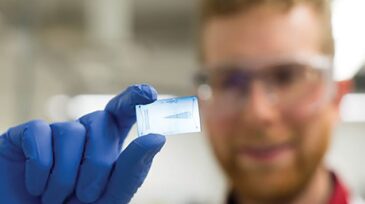
An oil and gas startup has attracted the business with a major operator thanks to its ability to forecast whether production-enhancing chemicals will work as advertised.
-
A contest where teams of college students design and build an automated drilling rig able to deal with hazardous obstacles in a test block, showed how a small change can be engineered to matter.
-
Mature brownfields contribute significantly to global oil production. A study of the papers presented during the past year at various SPE conferences reveals continuation of the trend to put in massive effort to minimize decline from mature brownfields.
-
Well RXY is located in Cairn’s Ravva offshore field in the Krishna-Godavari Basin in India. One goal for the field was significant crude production by means of a secondary reservoir section.
-
This paper presents technologies and best practices to improve oil recovery in mature fields through waterflooding optimization. These technologies have proved practical and cost-effective.
-
This paper presents an interdisciplinary approach to the description of tectonic dislocations made on the basis of interpretation of seismic data, petrophysical analysis of well-logging data in horizontal wells, and inversion of a multifrequency propagation tool.
-
Nonaqueous drilling fluids, such as synthetic-based and oil-based mud (SBM and OBM, respectively), are used frequently to drill one or more sections of a well to reduce drilling problems such as shale sloughing, wellbore stability, and stuck pipe.