Hydraulic Fracturing Content Feed
-
 As operators seek lower water management costs, a pair of studies examines methods and technologies that could have a major impact on treatment and reuse for hydraulic fracturing operations and beyond.
 -
Researchers at Texas Tech University have released a study into wastewater production and disposal in the Marcellus Shale, proposing disposal hubs across the state of Pennsylvania that could reduce trucking distances.
-
To better protect workers exposed to respirable crystalline silica, OSHA has issued two new standards: one for construction and another for general industry and maritime. OSHA will begin enforcing most provisions of the standard for general industry and maritime on 23 June.
-
A new report on shale gas from UNCTAD addresses the balance between providing affordable energy to developing countries and the agency’s climate change goals.
-
Longmont, Colorado's City Council voted to give final approval to the city's $3 million agreement with TOP Operating and Cub Creek Energy that officials have said will end oil and gas drilling from the surfaces of properties within the city, as well as city-owned properties east of Longmont.
-
The Scottish Government has been urged to explain its position on hydraulic fracturing after telling a judge that no ban is in place and ministers still have to make up their minds.
-
Higher oil prices and higher-intensity completions are increasing the need for US onshore pressure pumping horsepower. Will still recovering pressure pumpers and equipment manufacturers be able to step up?
-
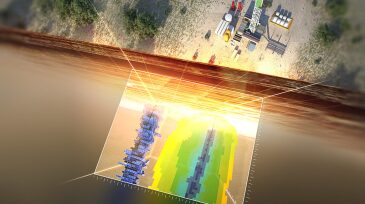
SponsoredA Midland Basin case study on estimating production, drainage volume, and interference from multiple stacked wells.
-
Prompted by concerns about possible leaching from phenolic novolac resin-coated proppants (RCPs) during operations, Fairmount Santrol conducted analysis that showed no leaching of free formaldehyde or free phenol from its phenolic novolac RCPs.
-
A small group of engineers are turning a geeky focus on how to better control the flow of fluids through the holes shot in the casing to increase the number of spots stimulated, and ultimately production.