

Latest News
-
 The authors of this paper investigate the application of two seismic monitoring methods in monitoring carbon leaks: full waveform inversion and reverse-time migration.
 -
This paper describes a method with multitiered analysis to leverage machine-learning techniques to process passive seismic monitoring data, pumping and injection pressure, and rate for fracture and fault analysis.
-
This paper describes an autonomous drilling approach using an autocurve-drilling mode to automatically drill curved sections without human intervention and complete autonomous well construction.
-
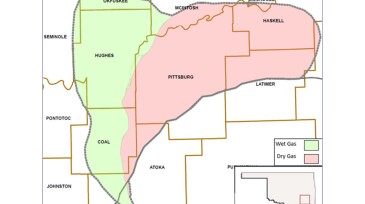
This paper describes an effort to use multiple technologies to better understand an Arkoma Basin reservoir and the interdisciplinary relationship between the reservoir’s subsurface hazards and a stimulation treatment.
-
The main objective of this paper is to investigate the relationship between strain change and pressure change under various fractured reservoir conditions to better estimate conductive fractures and pressure profiles.
-
Executives from BKV Corp. share why the mid-sized natural gas producer is diving headfirst into carbon sequestration projects and why you should too.
-
This paper presents an approach for automatic daily-drilling-report classification that incorporates new techniques of artificial intelligence.
-
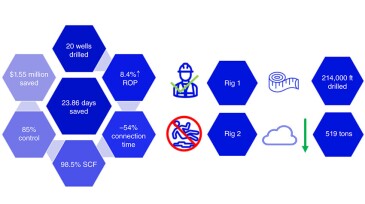
The authors of this paper present the results of implementing a rig-automation solution applied to 20 wells in Ecuador in 2022.
-
Chevron has some new ideas on how to get more oil for less cost out of shale wells in their early years.
-
SPE President Terry Palisch is joined by Bryan Hibbard, senior editorial operations manager for SPE, to highlight how writing SPE technical papers and articles for JPT, SPE Journal, and other SPE publications can help to boost your career.
-
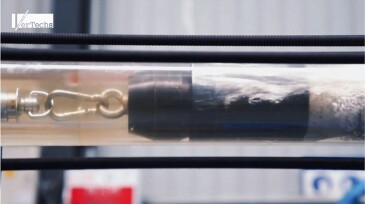
Casing deformations are common in the south-west shale regions of China and the Middle East, where the widespread use of 5.5-in., 26- and 26.8-lb/ft casing is the norm. In these regions, the majority of frac plugs are designed with an outer diameter (OD) of 4.055 in. or slightly larger, which frequently encounter restrictions resulting in the loss of bottomhole assemb…
-
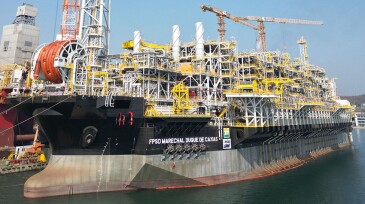
The Libra Consortium, led by Brazil’s Petrobras, has developed a method of separating carbon dioxide from reservoir fluids at the seafloor rather than the FPSO topsides.






Explore Content by Discipline
Trending Content




Get JPT articles in your LinkedIn feed and stay current with oil and gas news and technology.