

Latest News
-
 The pandemic shrank technical teams across the upstream industry, raising new and important questions about how training and knowledge sharing must evolve.
 -
This paper presents an automated directional-drilling process executed on a commercial well in the Norwegian sector of the North Sea, where a next-generation intelligent rotary steerable system completed a well section in a single run.
-
Founded by former analytics experts for a large US independent, Xecta Digital Labs is proposing a new analysis method for horizontal wells. Adopting it means turning the page on some old habits.
-
This paper describes a collaboration between the operator and a service company that resulted in a successful deployment of an automation platform to manage risks and optimize drilling operations in exploration wells.
-
The authors of this paper develop a model that can predict well-risk level and provide a method to convert associated failure risk of each element in the well envelope into a tangible value.
-
This paper presents agile technologies that integrate data management, data-quality assessment, and predictive machine learning to maximize asset value using underused legacy core data.
-
Oil and gas operators around the globe are targeting reductions in offshore carbon emissions, and facilities electrification is the key that will help them meet their goals.
-
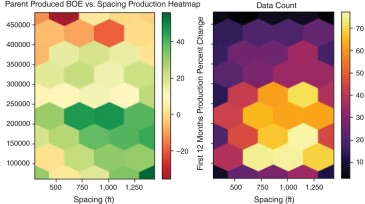
The authors write that child-well performance increases with spacing and decreases with infill timing and that the parent cumulative production at child-well completion is an effective indicator of child-well performance.
-
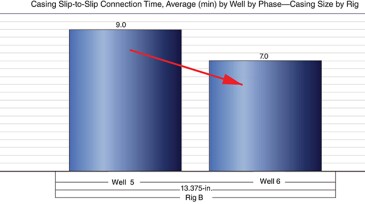
This paper discusses the strategy, approach, and challenges faced in the adoption and implementation of an onsite and remote automated-drilling performance measurement.
-
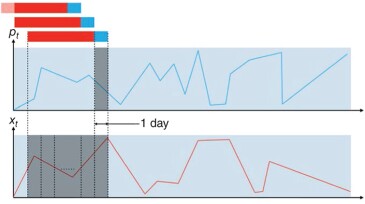
The authors of this paper propose a novel approach to data-driven modeling for transient production of oil wells.
-
Injecting gas plus water proved more effective and less costly than gas-only injection in the Bakken.
-
A just-launched publicly available database translates reserves and production data into greenhouse-gas emissions as CO2 equivalents. It was built using data from more than 50,000 fields in 89 countries, which covers about 75% of global reserves, production, and emissions.





Explore Content by Discipline
Trending Content


Get JPT articles in your LinkedIn feed and stay current with oil and gas news and technology.