

Latest News
-
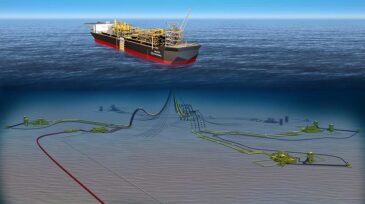
 Partnership will move forward with the multibillion dollar Australian gas and condensate development.
 -
Anomalies in heart function can be diagnosed in real time by measuring an electrical signal. Petroleum engineers have adapted the concept to diagnose anomalous drilling conditions in real time using a shock signature recorded downhole.
-
The secretaries of the Interior, Energy, Commerce, and Transportation departments met at the White House to discuss advancing wind energy in the United States while the Bureau of Ocean Energy Management identified prime areas for offshore wind energy off the US East Coast.
-
The plan is designed to facilitate progress toward net-zero-emissions targets by focusing on the government’s 10-point plan for a green industrial revolution.
-
Oslo-based consultancy Rystad Energy sees the potential for robots and automation to replace up to 400,000 roles in North America, Europe, and Russia by 2030. The timeline is not guaranteed, though, and will move at a speed set by human decision making.
-
Equinor tapped Ryder Architecture for a newbuild facility to serve as the main hub for the world’s largest offshore wind farm.
-
Once heralded as a major achievement of Mexico's energy reforms designed to entice foreign investment, control of the Zama field has been in dispute for 2 years and is now likely to be decided by industry regulators.
-
The major rule change adopted this month also gives oil and gas producers a deadline to capture 98% of their produced gas by 2026.
-
The World Economic Forum’s Human Capital initiative has been implemented at Satbayev University in Kazakhstan for the past 2 years. This paper assesses the effectiveness of project components, such as industry guest lectures, summer internships, and program improvement, and provides lessons learned for human resources development.
-
The company’s newest product will combine with Amazon Web Service’s efforts to ease access to data from the Open Subsurface Data Universe.
-
For oil and gas companies to remain in existence in the second half of the 21st century, they must find ways to dramatically reduce, if not eliminate, their output of carbon dioxide and other greenhouse gases. Artificial intelligence technology could provide one tool to help the energy industry accomplish that staggeringly difficult goal.
-
Iraq, which is second only to Russia in terms of gas flaring, is nearing an agreement with Total to implement dual-energy megaprojects to capture that gas and wean the country away from sanctioned Iranian gas and electricity imports. Solar power will play a major role.







Explore Content by Discipline
Trending Content



Get JPT articles in your LinkedIn feed and stay current with oil and gas news and technology.