

Latest News
-
 ROVOP, a provider of subsea remotely operated vehicle (ROV) services, appointed Lee Wilson to the newly created role of head of technology. He will lead the company's technology development in line with key client drivers such as cost optimization, digital transformation, and enhanced HSEQ performance, and will also oversee all business applications and IT aspects of …
 -
ExxonMobil is rolling out a project that will enable it to collect all operating data from its refineries and chemical plants—up to 1 billion bits per minute—into a high-performing computing environment.
-
BP Ventures has invested $5 million in Belmont Technology’s Series A financing to further bolster BP’s artificial intelligence and digital capabilities in its upstream business.
-
Ridding science of shoddy statistics will require scrutiny of every step, not merely the last one.
-
A new report expects US producers to drill their highest number of wells since 2014, and that completion activity may exceed drilling for the first time since 2016.
-
The deal calls for CNOOC to get 1.5 mtpa of gas from the Anadarko-operated Mozambique LNG project over the next 13 years. The project is the first onshore LNG development for the coastal East African nation.
-
Nesh's digital assistant technology wants to make industry information more easily accessible for energy professionals.
-
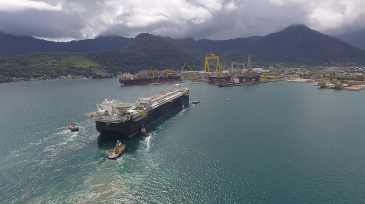
Petrobras and Shell have brought online the Lula field’s seventh FPSO as the firms continue to ramp up production from the pre-salt Santos Basin.
-
Occupational diseases of employees can have a significant impact on workplace productivity and exact an unmeasurable emotional and financial toll on the workers and their families. It is important to design programs that will put the workplace on a journey toward prevention of diseases.
-
The $10-billion deal will add liquefaction and export capabilities to the existing facility in Sabine Pass, Texas, according to a Reuters report. Golden Pass currently handles up to 2 Bcf/D of natural gas imports to North American markets.
-
Since 2011, Equinor has reduced carbon dioxide emissions from its logistical operations for the Norwegian continental shelf (NCS) by 600,000 tonnes. The company’s ambition is to halve emissions in the NCS supply chain by 2030.
-
The deployment and adoption of digital technologies across the oil and gas value chain could help scale the effect of the industry’s methane-reduction efforts, finds a new report.









Explore Content by Discipline
Trending Content


Get JPT articles in your LinkedIn feed and stay current with oil and gas news and technology.