

Latest News
-
 Operators’ demands for structural designs are changing along with the need to produce from harsher environments, deeper waters, remote areas, and marginal fields. New-builds and modifications require different approaches in assessment of cost, design, and construction.
 -
There is little doubt that the industry is committed to improving its safety performance—and most agree that improving the collective culture around safety is an effective approach to achieving this goal. But the specifics of how to achieve lasting change are more difficult.
-
This paper shows that viscosity has a significant influence on gas transient flow in pipe- and tank-leakage evaluation. This led to the development of a methodology for more reliable evaluation of gas transient flow.
-
A realistic computational fluid dynamics (CFD) simulation of a field three-phase separator has been developed. Further, a useful approach to estimating the particle size distribution in oilfield separators was developed. The predicted separation efficiencies are consistent with oilfield experience.
-
SPE has formed a new technical section focusing on human factors engineering, which seeks to bring in knowledge from other industries, thereby ensuring safe operations and fostering a coordinated safety culture from top-level executives to workers on the ground.
-
A recent webinar discussed current technologies to enable reuse of produced water in gas and oil shale developments.
-
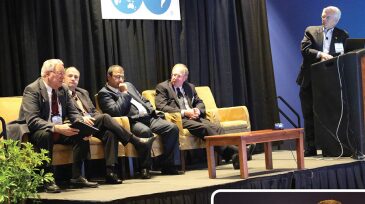
ATCE included expanded content for project, facilities and construction professionals. Panels discussed our performance in managing megaprojects and our challenges in designing separation equipment. Two technical paper sessions were also included.
-
Fluid flows in separation vessels are key to effective performance. The flow distributions are affected by the vessel, the configuration of its internals, and the layout of the upstream piping connecting to the vessel’s inlet nozzle.
-
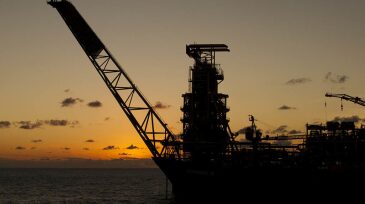
Expenditures for floating production systems are expected to more than double in the next five years. This growth is driven by multiple factors.
-
ExxonMobil is testing its Controlled Freeze Zone technology, a single-step cryogenic process that allows carbon dioxide (CO2) to freeze in a controlled method and then melts the CO2. After recovery of the methane, the CO2 can be sequestered or used for EOR.
-
In this paper, a data-driven model is applied to derive optimum maintenance strategy for a petroleum pipeline. The model incorporates structured expert judgment to calculate the frequency of failure, considering various failure mechanisms.
-
Engineering culture is largely a safety culture. We have to assume that people will make a mistake and protect them from themselves through the way we design facilities.





Explore Content by Discipline
Trending Content


Get JPT articles in your LinkedIn feed and stay current with oil and gas news and technology.