

Monthly Features
-
 As equipment advances to handle extreme pressures and temperatures, new Gulf opportunities are emerging—alongside increasing operator demands for standardized, scalable, faster, and more affordable solutions.
 -
 Ultradeepwater prospects along the northern coast of Brazil could help offset decline in legacy basins, though permitting hurdles remain a wild card.
 -
 This case study describes how edge computing and industrial internet of things platforms were deployed to automate and optimize production operations across four distinct basins.
 -
 This case study presents a procedure in which the operator compared production from wells with adjusted wettability to a control group, finding that the adjustments resulted in significant improvements in production and reductions in produced water.
 -
 The US federal government is working to stymie offshore wind power, but proponents aren’t going quietly. Armed with data, they are taking on a sea of misinformation and hostility to defend the burgeoning resource in the US, while the rest of the world moves ahead briskly.
 -
 This case study from Erdos Miller outlines the use of magnetic short-hop technologies to complement the use of mud pulsers to transmit telemetry to surface.
-
 Majors and independents alike are targeting high-impact wells across the globe to boost future oil and gas production volumes.
 -
The world of artificial lift has witnessed a remarkable revolution over the past 25 years, with many of the events and technology trends recorded in the Journal of Petroleum Technology.
-
The Libra Consortium, led by Brazil’s Petrobras, has developed a method of separating carbon dioxide from reservoir fluids at the seafloor rather than the FPSO topsides.
-
The topics covered in JPT’s Technology Focus feature span the breadth of the upstream industry. A review of these topics over the years illustrates the changes that have affected E&P professionals.
-
Chevron has some new ideas on how to get more oil for less cost out of shale wells in their early years.
-
Longtime JPT Technology Editor Dennis Denney discusses his career at SPE and the development of the magazine’s Technology Focus feature.
-
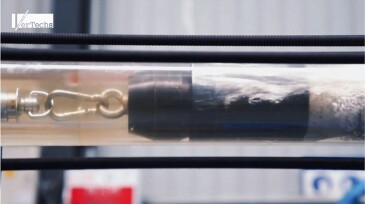
Casing deformations are common in the south-west shale regions of China and the Middle East, where the widespread use of 5.5-in., 26- and 26.8-lb/ft casing is the norm. In these regions, the majority of frac plugs are designed with an outer diameter (OD) of 4.055 in. or slightly larger, which frequently encounter restrictions resulting in the loss of bottomhole assemb…
-
Executives from BKV Corp. share why the mid-sized natural gas producer is diving headfirst into carbon sequestration projects and why you should too.
-
An engineered approach to fracture growth in hydraulic fracturing highlights the successful execution of H2S prevention strategies in North Dakota’s Williston Basin.
-
The increasing demand for critical minerals—the building blocks of an electrified future—is creating opportunities for the oil and gas industry to apply its extensive knowledge, tools, and data to help meet the demand.









Explore Content by Discipline
Power Up With JPT Newsletters
JPT Newsletter (Weekly).
All the top stories, trends, and tech.
JPT Unconventional Insights (Monthly).
Fresh takes on shale and tight oil.
Get JPT articles in your LinkedIn feed and stay current with oil and gas news and technology.