

Monthly Features
-
 EQT is benchmarking its way to basin-leading productivity and relying on partnerships and new technology to turn KPIs into operational reality.
 -
 Drilling experts recently shared candid views on what will be required for their segment of the upstream business to move to the next stage of development.
 -
 This case study from Italian technology developer Sentris highlights the effectiveness of using sensors during pigging operations to optimize cleaning efficiency.
 -
 Experts and industry leaders gathered in The Woodlands, Texas, recently to sift through the challenges of carbon capture, utilization, and storage. The puzzle is coming together, but some critical pieces are still needed before the results look like the picture on the box.
 -
 Ian Phillips is the nominee for 2028 SPE President. He and six others make up the new slate of nominees recommended for positions open on the SPE International Board of Directors.
 -
 Two examples from ONGC show how supervised AI-driven automation scaled well modeling across hundreds of offshore wells, saving more than 1,000 engineering hours.
-
 Funding for startups in the upstream industry does not always guarantee that oil and gas companies will want to test the new technology. A new venture and accelerator model hopes to change this through guaranteed pilots.
 -
BP’s latest annual energy outlook considers many scenarios for the future, and they all require engineers to find a lot more oil to meet high demand.
-
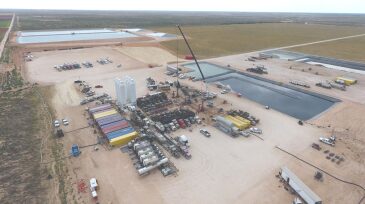
Finding water for hydraulic fracturing and then finding a use for it when it flows back are critical engineering problems to solve in the booming Permian Basin.
-
The struggle to overcome the challenge of frac hits has led to a critical dialogue about which pathway the shale sector should take. One idea is to simply put the problem at the center of every major decision.
-
The technology is being proven in millions of phones and homes across the world. Now, a small group of software startups wants to introduce chat bot technology to oil and gas professionals.
-
The constant talk about the data-driven future of the oil and gas business poses a threatening question for some petroleum engineers: What do I need to know to ensure I have a job next year?
-
In their outlook for 2019, SPE’s technical directors suggest petroleum engineers take a moment to reflect on the industry’s great feats, and then get back to work to do things better.
-
An oil and gas startup has attracted the business with a major operator thanks to its ability to forecast whether production-enhancing chemicals will work as advertised.
-
A contest where teams of college students design and build an automated drilling rig able to deal with hazardous obstacles in a test block, showed how a small change can be engineered to matter.
-
Producers in Texas have claimed an economic victory with their transition to local sands that they once avoided using in horizontal wells due to their low-quality.




Explore Content by Discipline
Power Up With JPT Newsletters
JPT Newsletter (Weekly).
All the top stories, trends, and tech.
JPT Unconventional Insights (Monthly).
Fresh takes on shale and tight oil.
Get JPT articles in your LinkedIn feed and stay current with oil and gas news and technology.