

Monthly Features
-
 Drilling experts recently shared candid views on what will be required for their segment of the upstream business to move to the next stage of development.
 -
 EQT is benchmarking its way to basin-leading productivity and relying on partnerships and new technology to turn KPIs into operational reality.
 -
 This case study from Italian technology developer Sentris highlights the effectiveness of using sensors during pigging operations to optimize cleaning efficiency.
 -
 Experts and industry leaders gathered in The Woodlands, Texas, recently to sift through the challenges of carbon capture, utilization, and storage. The puzzle is coming together, but some critical pieces are still needed before the results look like the picture on the box.
 -
 Two examples from ONGC show how supervised AI-driven automation scaled well modeling across hundreds of offshore wells, saving more than 1,000 engineering hours.
 -
 Examples demonstrate how an Integrated Operations Center as a Service (IOCaaS) model, powered by artificial intelligence, reduced costs by 5% and increased production by 6% in Canada.
-
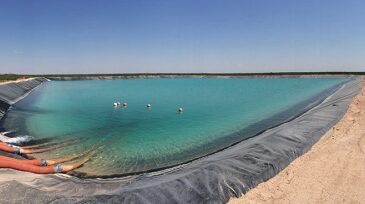
 Over the next few years, water treatment technologies are expected to continue to be deployed in the basin, as drought drives aquifer levels to new lows.
 -
In response to “The Unfinished Revolution: What is Missing From the E&P Industry’s Move to ‘Big Data’” by Robert K. Perrons and Jesse Jensen (May 2014 JPT).
-
-
Celebrating five individuals and their contributions to the industry.
-
Technical Papers and Books: Authored or Coauthored by the Legends of Artificial Lift
-
How universities are investing in research and development to meet demand for new technologies in the search for hydrocarbons.
-
Demand for a better way to remove carbon dioxide (CO2) from natural gas led to the creation of a new material at Rice University in Houston that does something unprecedented on the molecular scale, and might even change gas processing.
-
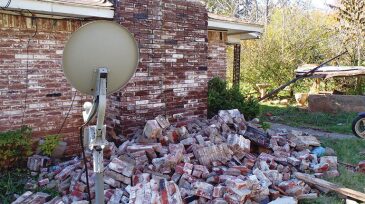
A sharp rise in seismic events in some areas of the United States where oil and gas production is booming is leading regulators and the industry to examine whether the two are related.
-
Last year, lawmakers in the United States sent a blunt message to the oil business: If it wants new exploration and production technology, it will need to pick up more of the cost.
-
SPE’s 2014 Annual Technical Conference and Exhibition (ATCE) will be held at the Amsterdam RAI Exhibition and Convention Centre in Amsterdam, Netherlands, during 27–29 October. Since the first ATCE in 1924, this is the second time its venue will be in Europe.




Explore Content by Discipline
Power Up With JPT Newsletters
JPT Newsletter (Weekly).
All the top stories, trends, and tech.
JPT Unconventional Insights (Monthly).
Fresh takes on shale and tight oil.
Get JPT articles in your LinkedIn feed and stay current with oil and gas news and technology.