

Monthly Features
-
 Drilling experts recently shared candid views on what will be required for their segment of the upstream business to move to the next stage of development.
 -
 EQT is benchmarking its way to basin-leading productivity and relying on partnerships and new technology to turn KPIs into operational reality.
 -
 This case study from Italian technology developer Sentris highlights the effectiveness of using sensors during pigging operations to optimize cleaning efficiency.
 -
 Experts and industry leaders gathered in The Woodlands, Texas, recently to sift through the challenges of carbon capture, utilization, and storage. The puzzle is coming together, but some critical pieces are still needed before the results look like the picture on the box.
 -
 Two examples from ONGC show how supervised AI-driven automation scaled well modeling across hundreds of offshore wells, saving more than 1,000 engineering hours.
 -
 Examples demonstrate how an Integrated Operations Center as a Service (IOCaaS) model, powered by artificial intelligence, reduced costs by 5% and increased production by 6% in Canada.
-
 As the task of finding and producing hydrocarbons becomes more difficult, complex, and costly, the number of universities focusing on finding solutions has risen.
 -
One of the earliest problems that plagued downhole fiber-optic technology is known as hydrogen darkening.
-
It has been an impressive comeback for a technology that once stood on the brink of failure. The upstream oil and gas industry has largely resolved crippling technical challenges that shortened the life of fiber-optic cables in downhole applications and is now working on a big encore.
-
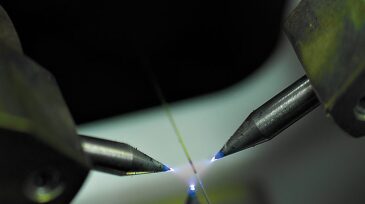
Downhole fiber-optic systems work by using a small laser that fires off a pulse of light through hair-thin cables made of silica glass.
-
Saudi Aramco says its Manifa field is an example of how it is combining its technology and innovation capabilities to develop one of the most challenging megaprojects in the history of the company.
-
A US oil company is using its in-house laboratory's digital imaging devices to analyze reservoir rocks in new plays to answer questions raised by complex tight oil formations that cannot be answered using routine core testing methods.
-
When discussing dual-gradient drilling, there is an important distinction between controlling wells and well control.
-
Dual-gradient drilling covers a variety of methods for managing pressure within an offshore well while drilling. Dual refers to systems built to reduce or eliminate the pressure added by drilling fluid in the riser. The goal is to create distinct pressure gradients above and below the mudline.
-
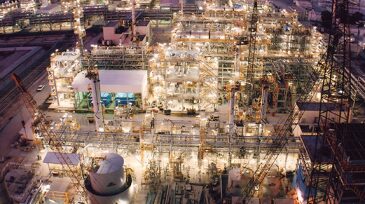
Qatar has unveiled a plan to become the Middle East's energy research and development center now that it has completed a massive liquefied natural gas production upgrade.
-
Featuring speakers from various disciplines and professions, the 2014–15 Distinguished Lecturer Program emphasizes current industry trends, challenges, and technology applications through diverse topics.




Explore Content by Discipline
Power Up With JPT Newsletters
JPT Newsletter (Weekly).
All the top stories, trends, and tech.
JPT Unconventional Insights (Monthly).
Fresh takes on shale and tight oil.
Get JPT articles in your LinkedIn feed and stay current with oil and gas news and technology.