

Monthly Features
-
 Oil prices are high, but spending has not caught up—yet. Meanwhile, exploration strategies are changing around the world toward a lower-risk model, and the frenzied pace of US M&A has very much cooled off.
 -
 This case study outlines a full-scale testing program focused on the behavior of thermal casing connections subjected to severe bending and low-cycle fatigue loading.
 -
 With millions of wells having been drilled in the US since the beginning of the oil age, the land is pocked with old, unused wellbores. For most, repurposing is a pipe dream. Plugging is the best option.
 -
 Disposal wells remain the lowest-cost solution for produced water, but concerns over seismicity and long-term sustainability are accelerating interest in alternatives.
 -
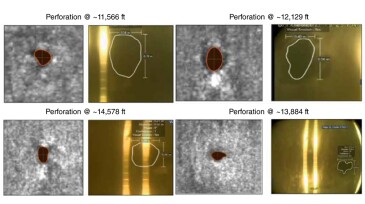
 This case study from Malaysia’s Petronas outlines a comprehensive review of perforation-charge testing across various tubular and reservoir conditions to help improve production from complex downhole scenarios.
 -
 As managed pressure drilling gains traction, its principles are influencing a wider range of well-construction activities.
-
 Leading energy technology companies unite to unlock efficiencies and increase reserve recoveries using digital advances.
 -
A decade ago, SPE defined key R&D and technology challenges for the industry. To address the more uncertain environment of the 2020s and beyond, we have updated the grand challenges via a January 2023 SPE workshop.
-
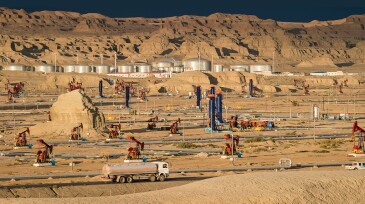
CNPC’s record-breaking 11,100-m exploration borehole in the Taklamakan Desert promises to unlock the science of producing oil and gas trapped in the world’s deepest reservoirs.
-
Recent developments from Equinor and Murphy Oil Corp. offer hope that the industry is zeroing in the right approach to building megaprojects.
-
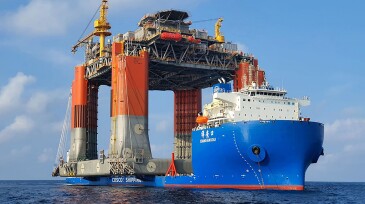
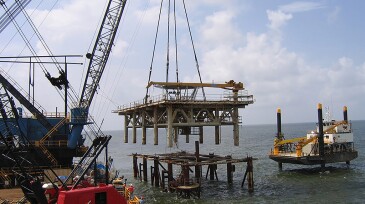
With global decommissioning activities forecast to reach $100 billion through 2030, early planning for it could go far in helping to minimize risk and associated costs.
-
A dissolvable collet field tested in an unconventional completion led to an average running time of 32 minutes per stage in a vertical section and 19 minutes per stage in the horizontal section.
-
When there are two ways to measure something, and they offer significantly different numbers, which do you use?
-
This article describes the MiQ grading framework for natural gas in detail and explains practical pathways for industry participants to achieve any desired MiQ grade.
-
In Part 2 of a series of articles, the author focuses on generating a connection between the problem types and various methods of trying to solve these problems.
-
The Offshore Technology Conference announces the 2023 recipients of the Spotlight on New Technology Award.




Explore Content by Discipline
Stay Ahead With JPT Newsletters
JPT Newsletter (Weekly).
Essential global industry news, technology developments, and market trends delivered to your inbox.
JPT Unconventional Insights (Monthly).
Global perspectives and expert analysis on shale, tight oil, and emerging unconventional plays.
Get JPT articles in your LinkedIn feed and stay current with oil and gas news and technology.