

Monthly Features
-
 Oil prices are high, but spending has not caught up—yet. Meanwhile, exploration strategies are changing around the world toward a lower-risk model, and the frenzied pace of US M&A has very much cooled off.
 -
 This case study outlines a full-scale testing program focused on the behavior of thermal casing connections subjected to severe bending and low-cycle fatigue loading.
 -
 With millions of wells having been drilled in the US since the beginning of the oil age, the land is pocked with old, unused wellbores. For most, repurposing is a pipe dream. Plugging is the best option.
 -
 Disposal wells remain the lowest-cost solution for produced water, but concerns over seismicity and long-term sustainability are accelerating interest in alternatives.
 -
 This case study from Malaysia’s Petronas outlines a comprehensive review of perforation-charge testing across various tubular and reservoir conditions to help improve production from complex downhole scenarios.
 -
 As managed pressure drilling gains traction, its principles are influencing a wider range of well-construction activities.
-
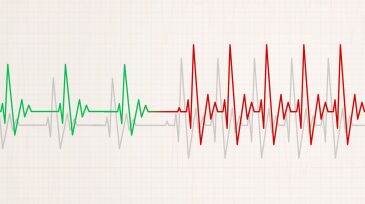
 Anomalies in heart function can be diagnosed in real time by measuring an electrical signal. Petroleum engineers have adapted the concept to diagnose anomalous drilling conditions in real time using a shock signature recorded downhole.
 -
Will the oil fields of today become the hydrogen fields of tomorrow? Calgary-based Proton Technologies says this is possible and hopes to prove it soon after inking multiple licensing deals with other oil and gas companies.
-
Technology is advancing, and applications are growing, but scaling faces technological and human challenges.
-
Algorithms are taking over the world, or so we are led to believe, given their growing pervasiveness in multiple fields of human endeavor such as consumer marketing, finance, design and manufacturing, health care, politics, and sports. The focus of this article is to examine where things stand in regard to the application of these techniques for managing subsurface en…
-
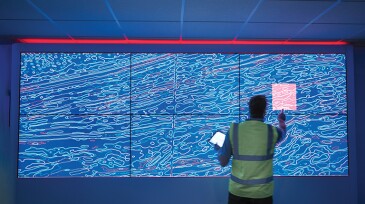
Artificial intelligence is opening new ways to analyze data from microseismic events that occur during hydraulic fracturing. One researcher at Moscow’s Skolkovo Institute of Science and Technology is building a convolutional neural network to get a subsurface view of permeability after fracturing.
-
The oil and gas industry, which had begun showing signs of recovery from a generational downturn, was brought to its knees by the COVID-19 pandemic in 2020. SPE’s technical directors reflect on the pandemic’s impacts and share their outlooks going forward in this annual roundup.
-
Interface Fluidics carved out a niche for itself in the oilfield testing sector a few years ago with a new alternative to coreflooding. Now, along with Equinor, the Calgary-based company is taking on another industry laboratory stalwart: the slimtube test.
-
Innovators at the Norwegian oil company have developed a machine-learning model that analyzes mud-gas data to predict the gas/oil ratio of wells as they are drilled—something that the industry has worked for decades to accomplish.
-
Shell and Tomson Technologies completed field trials in the Gulf of Mexico using new nanoparticle-enabled phosphonate and polymer inhibitors that improve the treatment lifetime of scale squeezes.
-
In striving to boost production of shale gas and tight oil, China is trying enhanced-hydraulic-fracturing technology and real-time data analysis in the Sichuan shale basin. In Daqing’s tight-oil fields, an alternative fracture-completion strategy and post-stimulation flowback technology has been tested.




Explore Content by Discipline
Stay Ahead With JPT Newsletters
JPT Newsletter (Weekly).
Essential global industry news, technology developments, and market trends delivered to your inbox.
JPT Unconventional Insights (Monthly).
Global perspectives and expert analysis on shale, tight oil, and emerging unconventional plays.
Get JPT articles in your LinkedIn feed and stay current with oil and gas news and technology.