

Monthly Features
-
 Oil prices are high, but spending has not caught up—yet. Meanwhile, exploration strategies are changing around the world toward a lower-risk model, and the frenzied pace of US M&A has very much cooled off.
 -
 This case study outlines a full-scale testing program focused on the behavior of thermal casing connections subjected to severe bending and low-cycle fatigue loading.
 -
 With millions of wells having been drilled in the US since the beginning of the oil age, the land is pocked with old, unused wellbores. For most, repurposing is a pipe dream. Plugging is the best option.
 -
 Disposal wells remain the lowest-cost solution for produced water, but concerns over seismicity and long-term sustainability are accelerating interest in alternatives.
 -
 This case study from Malaysia’s Petronas outlines a comprehensive review of perforation-charge testing across various tubular and reservoir conditions to help improve production from complex downhole scenarios.
 -
 As managed pressure drilling gains traction, its principles are influencing a wider range of well-construction activities.
-
 When engineers went searching for clues on how fractures move beneath the surface, they expected to uncover important learnings. They did not know they were on the path to a new invention.
 -
Every horizontal well must pass through the flowback phase before it becomes a true producer. A wealth of insights are generated during this period, but they only matter if an operator knows how to listen and interpret the data sets correctly.
-
A group of people who really care how drillers code the memos added to the daily drilling report is the data scientists—who find that the coded tags do not match the activity. A program that helps drillers code is one of three technologies featured in a JPT series on drilling measurement innovation.
-
Instead of burning money, why not make electricity? This is the big pitch being made by a growing number of technology companies who see green every time they see a red-hot flare burning associated gas.
-
Digital advances allow computers to do many of the tedious tasks once done by engineers, which frees them to focus on more interesting tasks.
-
Artificial intelligence can do some things faster and better than humans can. But that may allow engineers to focus on higher-value tasks.
-
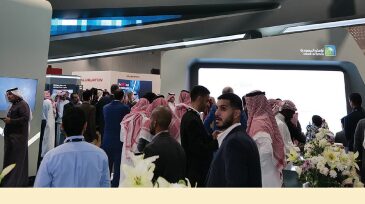
The first interdisciplinary oil and gas conference to be held in Saudi Arabia, the 12th International Petroleum Technology Conference, was the largest in its history in attendance. This features highlights of the panel and technical sessions, and an interview with Saudi Aramco CEO Amin Nasser.
-
Hon-Chung Lau, professor of petroleum engineering at the National University of Singapore, offered a short guide to a successful career in petroleum engineering at the 2019 SPE Annual Technical Conference and Exhibition.
-
On the edge of the Arabian Desert, a megaproject located above the Arctic Circle was given the IPTC Excellence in Project Integration Award.
-
JPT interviewed Saudi Aramco President and Chief Executive Officer Amin Nasser during IPTC. He discussed the company’s outlook for the new year and the current state of the oil and gas industry.







Explore Content by Discipline
Stay Ahead With JPT Newsletters
JPT Newsletter (Weekly).
Essential global industry news, technology developments, and market trends delivered to your inbox.
JPT Unconventional Insights (Monthly).
Global perspectives and expert analysis on shale, tight oil, and emerging unconventional plays.
Get JPT articles in your LinkedIn feed and stay current with oil and gas news and technology.