

Monthly Features
-
 Oil prices are high, but spending has not caught up—yet. Meanwhile, exploration strategies are changing around the world toward a lower-risk model, and the frenzied pace of US M&A has very much cooled off.
 -
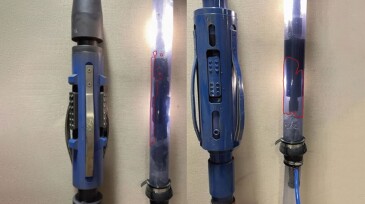
 This case study outlines a full-scale testing program focused on the behavior of thermal casing connections subjected to severe bending and low-cycle fatigue loading.
 -
 With millions of wells having been drilled in the US since the beginning of the oil age, the land is pocked with old, unused wellbores. For most, repurposing is a pipe dream. Plugging is the best option.
 -
 Disposal wells remain the lowest-cost solution for produced water, but concerns over seismicity and long-term sustainability are accelerating interest in alternatives.
 -
 As managed pressure drilling gains traction, its principles are influencing a wider range of well-construction activities.
 -
 From AI-enabled walking rigs to subsea drones and autonomous inspection robots, robotics is rapidly moving from pilot projects to field deployment. The technology promises not only greater efficiency but also a fundamental shift in how the industry approaches safety and asset management.
-
 A collaboration between a large independent and a technology developer used low-cost interventions to optimize production from unconventional wells.
 -
This article is the fifth in a Q&A series from the SPE Research and Development Technical Section focusing on emerging energy technologies. In this edition, Shantanu Agarwal, founder and CEO of Mati Carbon, discusses how the company’s approach to carbon removal led to winning the Musk Foundation’s XPRIZE in 2025.
-
EERC CEO Charles Gorecki outlines how applied research in North Dakota is helping improve oil recovery, reduce emissions, and advance carbon storage.
-
2025 has seen an 81% year-on-year rise in the number of small modular reactor designs to have secured at least one source of funding or a funding commitment.
-
The technology to desalinate and reuse produced water for cooling AI data centers in the Permian Basin exists, but addressing cost challenges remains critical to widespread adoption.
-
In today’s era of asset management, digital twins are changing risk management, optimizing operations, and benefitting the bottom line.
-
Industry observers warn that the future of the UK North Sea hinges less on geology than on whether fiscal stability can be restored.
-
Digitalization and advanced analytics have enabled drilling automation that is changing the way wells are executed to deliver more production earlier.
-
This article is the fourth in a Q&A series from the SPE Research and Development Technical Section focusing on emerging energy technologies. In this piece, David Reid, the CTO and CMO for NOV, discusses the evolution and current state of automated drilling systems.
-
Oil and gas experts encourage human/AI partnerships that can “supercharge” capabilities to create competitive advantages.




Explore Content by Discipline
Stay Ahead With JPT Newsletters
JPT Newsletter (Weekly).
Essential global industry news, technology developments, and market trends delivered to your inbox.
JPT Unconventional Insights (Monthly).
Global perspectives and expert analysis on shale, tight oil, and emerging unconventional plays.
Get JPT articles in your LinkedIn feed and stay current with oil and gas news and technology.