

Monthly Features
-
 Oil prices are high, but spending has not caught up—yet. Meanwhile, exploration strategies are changing around the world toward a lower-risk model, and the frenzied pace of US M&A has very much cooled off.
 -
 This case study outlines a full-scale testing program focused on the behavior of thermal casing connections subjected to severe bending and low-cycle fatigue loading.
 -
 Disposal wells remain the lowest-cost solution for produced water, but concerns over seismicity and long-term sustainability are accelerating interest in alternatives.
 -
 With millions of wells having been drilled in the US since the beginning of the oil age, the land is pocked with old, unused wellbores. For most, repurposing is a pipe dream. Plugging is the best option.
 -
 This case study from Malaysia’s Petronas outlines a comprehensive review of perforation-charge testing across various tubular and reservoir conditions to help improve production from complex downhole scenarios.
 -
 This case study presents the first field deployment of acoustic fracturing analysis to evaluate perforation efficiency and implement real-time interventions during pressure pumping.
-
 Dato’ Wee Yiaw Hin is executive vice president of Petronas Exploration & Production
 -
The first Offshore Technology Conference Asia exceeded attendance expectations while providing in-depth panel and technical sessions on the increasingly important Asian energy sector as well as other globally significant upstream trends and technology applications.
-
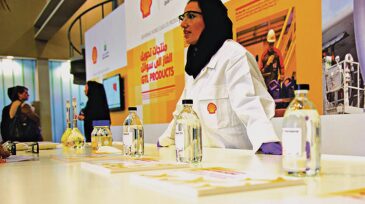
Youssif Saleh, general manager of Qatar Shell Research and Technology Centre in the Qatar Science and Technology Park, discusses the R&D strategy of the center and Qatar.
-
Nathan Meehan is the nominee for 2016 SPE president. He and nine others make up the slate of nominees recommended for positions open on the SPE Board of Directors.
-
Some operators are returning to their North American mature unconventional shale wells to refracture, or restimulate, the rock to accelerate production and enhance ultimate recoveries.
-
For companies working to maximize production and profits, one of the biggest questions has been, and continues to be, how manyu wells to drill per square mile.
-
The 45th edition of the Offshore Technology Conference (OTC) will take place 5–8 May at Reliant Park in Houston, Texas.
-
Imagine if you could have seen North America’s shale gas phenomenon coming, years ahead of the competition. What would you have done differently?
-
The simplest way to measure return on investment for an offshore water treatment system is to determine whether using the system actually reduces the risk of paying a fine for violating water pollution laws.
-
JPT interviewed Mohamed bin Saleh Al-Sada, Qatar’s minister of industry and energy, on the sidelines of this year’s IPTC.







Explore Content by Discipline
Stay Ahead With JPT Newsletters
JPT Newsletter (Weekly).
Essential global industry news, technology developments, and market trends delivered to your inbox.
JPT Unconventional Insights (Monthly).
Global perspectives and expert analysis on shale, tight oil, and emerging unconventional plays.
Get JPT articles in your LinkedIn feed and stay current with oil and gas news and technology.