

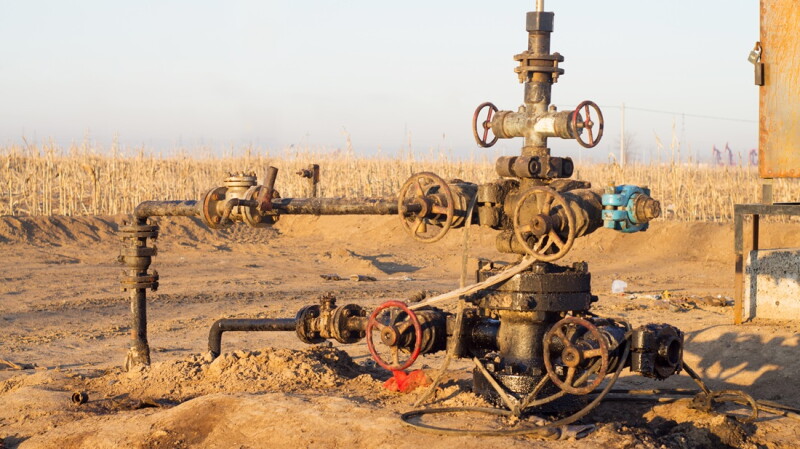
Orphan oil and gas wells—those without a responsible party or owner—are present across much of the US, and potentially hundreds of thousands of them have not been permanently sealed using modern standards, materials, or technology. Plugging them is an effective practice to mitigate the risks of leaks and reduce the potential for environmental and public health consequences, says a new report from the National Academies of Sciences, Engineering, and Medicine.
The report says state leadership and federal support have strengthened the nation’s capacity to address plugging orphan wells on state, federal, and tribal lands and recommends that future state and federal funding be considered to continue advancing such efforts.
Unplugged or improperly plugged wells risk the migration of contaminants such as oil, produced water, and methane or other gases. Migrating contaminants can endanger public and environmental health and inhibit use of the surrounding land.
“We hope our report will be used to advance best practices and new technologies for plugging wells,” said Mary Feeley, co-chair of the committee that wrote the report and a retired chief geoscientist at ExxonMobil. “This would benefit the public, the environment, and the economy.”
Most hydrocarbon wells are on private lands and fall under the regulatory authority of states. Decades of state leadership combined with recent federal investment have accelerated plugging and abandonment (P&A) efforts, but more can be done, the report says. It identifies opportunities to improve data collection, management, and access; improve post-plug monitoring; and support the development and adoption of emerging technologies and materials.
“States have historically taken the lead in addressing the risks posed by orphaned wells,” said Jim Slutz, managing director at the National Petroleum Council and co-chair of the committee. “Our recommendations seek to bolster their capacity to do this critical work.”
Improved Data and Monitoring
Access to orphan well data is important to the public sector, the oil and gas industry, and researchers, but information about well construction, operations, plugging records, and plugged well failures is not readily available. The committee recommended that a coordinated reporting and corrective action system be implemented to help standardize the collection and storage of data on orphan wells and plugged well failures. The report also advises that regulatory agencies require procedures to test and verify the structural integrity of well barriers.
States should make efforts to establish prioritization frameworks for post-plug monitoring, the report says, adding that it will allow states and tribes to focus resources on wells where monitoring would likely yield significant environmental and public health and safety benefits.
New Technologies and Workforce Development
New technologies have the potential to improve well plugging and make these efforts more cost-effective, but financial, institutional, and regulatory barriers complicate widespread adoption. The report recommends that states, federal and tribal agencies, industry, and researchers explore ways to share information about the effectiveness of new and evolving technology.
Workforce readiness presents another challenge to plugging wells in the future. The workforce in the oil and gas industry has been shrinking, while the need for workers skilled in P&A practices is anticipated to increase. The report urges universities, technical schools, apprenticeship programs, and states to implement training and certification programs specific to well P&A.
The study was undertaken by the Committee on Technologies and Practices for Plugging and Remediating Orphaned and Abandoned Oil and Gas Wells and sponsored by the US Department of the Interior’s Orphaned Wells Program Office.