deepwater
-
 For deepwater development, panelists at OTC emphasized the need for scalable technology, the standardization and simplification of projects, patient capital investment in innovation, greater collaboration, and new perspectives coming from outside the industry.
 -
A panel discussion at the 2016 OTC in Houston focused on the factors that influence deepwater developments, the scenario for the future, and the opportunities available within the industry. One key question asked was: What oil price is required to keep deepwater viable over the long term?
-
A new method for accessing and cementing hard-to-reach spaces around complex offshore wells.
-
A 2-year comprehensive effort to design, test, manufacture, and deploy a new high-pressure completion tubular for Chevron’s deepwater Gulf of Mexico (GOM) operations is presented.
-
The high costs surrounding deepwater developments and the low price of oil are a challenging combination for operators and service companies today.
-
This paper describes experiences, challenges, and approaches to solving the problems related to creating an advanced early kick-detection system suitable for floating mobile offshore drilling units.
-
The BC-10 asset, located in deep water offshore Brazil, produces heavy oil in the range of 16 to 24 °API. In this article, two examples of production optimization for this field will be provided (further examples are available in the complete paper).
-
This paper evaluates the feasibility of a number of production- and export-riser configurations for ultradeepwater applications.
-
Deepwater and ultradeepwater completions use numerous hydraulic control lines for control and actuation of downhole equipment.
-
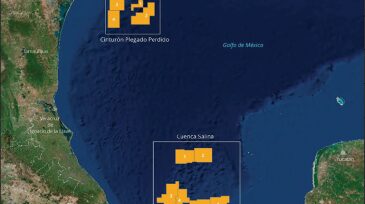
The deepwater blocks Mexico plans to lease to international operators in December are among the deepest, most remote, and geologically challenging in the world. But the difficulties of developing these areas will start onshore, where adequate and secure port facilities are few and far between.