deepwater
-
 The high costs surrounding deepwater developments and the low price of oil are a challenging combination for operators and service companies today.
-
This paper describes experiences, challenges, and approaches to solving the problems related to creating an advanced early kick-detection system suitable for floating mobile offshore drilling units.
-
Deepwater and ultradeepwater completions use numerous hydraulic control lines for control and actuation of downhole equipment.
-
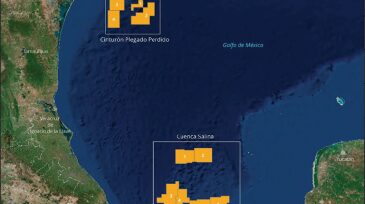
The deepwater blocks Mexico plans to lease to international operators in December are among the deepest, most remote, and geologically challenging in the world. But the difficulties of developing these areas will start onshore, where adequate and secure port facilities are few and far between.
-
A RPSEA project identified the gaps in technology that are the most pressing for multiphase-flow measurement.
-
As with other MPD systems, SMD technology offers early detection of influxes (kicks) and minimizes downhole losses to weak subsurface formations.
-
Techniques for well-abandonment log evaluations have been studied in the Gulf of Mexico since 2012. The new methods described in this paper consist of adding nuclear sensors to supplement the acoustic measurements and introduce novel processing methods.
-
New seismic data gathering techniques promise better images for less by gathering more data quicker, seeing past obstructions, and seeking out scarce frequencies.
-
Construction costs, contractor involvement, flow assurance, and the integration of new technologies created to improve production are some of the deepwater challenges exacerbated by the current low price environment.
-
In June, Mexico’s national oil company Pemex announced its largest discoveries of oil and gas in 5 years. Located in the shallow-water basin of the Gulf of Mexico offshore Tabasco and Campeche, the four new fields are estimated to hold 350 million bbl of oil.