Gulf of Mexico
-
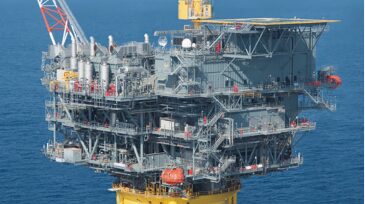
 Historically, the marine systems on a spar are relatively simple.
 -
After the 2010 subsea blowout of the Macondo well that resulted in 11 deaths and the worst oil spill in US history, early kick detection technology found itself at the top of the wish list for regulators and offshore companies seeking to avoid similar accidents.
-
This paper describes the architecture of the Lucius Gulf of Mexico subsea production system and the drivers behind it.
-
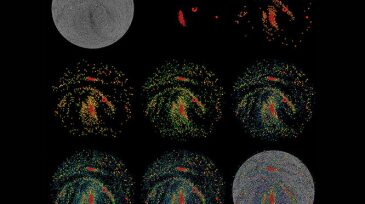
This paper provides a first-hand perspective on the appropriate handling of nanomaterials in a laboratory setting.
-
The lower tertiary formation found in the pre-salt layers of the Gulf of Mexico has become a proving ground for extending what is possible when completing multistage fracturing in ultradeepwater wells.
-
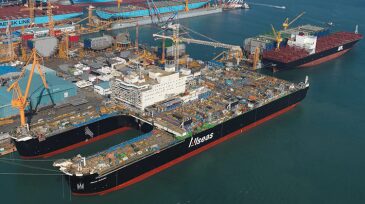
The Mars-B project is the operator’s sixth Gulf of Mexico (GOM) tension-leg-platform (TLP) development.
-
An ongoing research project started nearly 3 years ago by the US Department of Energy’s National Energy Technology Laboratory (NETL) is shedding new light on what really happens to foamed cement as it is pumped deep down offshore wells during completions.
-
When he started his firm focused on removing obsolete offshore structures, Brian Twomey chose the name: Reverse Engineering Services. The thinking was that taking out a structure is like building it, but in reverse.
-
In response to the 2010 Deepwater Horizon incident that claimed the lives of 11 men and led to the worst oil spill in United States history, the offshore industry devised new technologies and methods that would allow for a quicker response in the US Gulf of Mexico.
-
The value of new technology, and its ROI, is examined. Understanding the value proposition is not a trivial matter. When investing in facilities technologies, we have traditionally looked to invest in those that will reduce Capex or Opex. But what about niche technologies?