natural gas
-
 The facility would be the first of its kind in the US and is planned to be located in West Texas’ Permian Basin.
 -
The EU sees the tightening requirements for gas investments, along with the cancellation of planned gas projects, as being in favor of renewables.
-
The deal expands the largest gas producer's operations into the core of the northeast Marcellus Shale.
-
Garden Banks Pipeline was notified that the Sea Robin delivery point was also made available after Enbridge lifted its force majeure.
-
Tellurian CEO Meg Gentle outlined how the US LNG market should address expected tight market conditions through 2025 while managing a transition to a carbon neutral environment.
-
Crude oil and natural gas prices may recover moving into 2021, albeit at different rates brought on by a variety of market dynamics. Geopolitics and the potential for another wave of COVID-19 cases and resulting lockdowns still pose a threat to the industry.
-
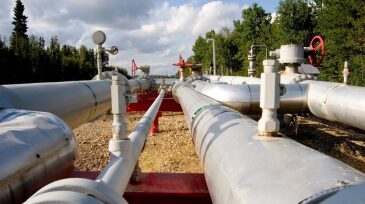
The growing opposition in the US for new natural gas pipelines comes as supply and demand continue to grow. Pipelines are necessary for the transport of the gas. Why is there a disconnect between the two?
-
For an industry once fueled by the law of supply and demand, the new economic reality has brought new rules.
-
In its May 2020 Short-Term Energy Outlook, the US Energy Information Administration (EIA) forecast US-marketed natural gas production to decrease by 5% in 2020. Production is expected to average 94.3 Bcf/D in 2020, down from 99.2 Bcf/D in 2019.
-
The $20.7-billion agreement is the single-largest energy infrastructure investment in the region.