offshore
-
 The United States’ top offshore regulator said his agency is adopting new policies and measures to improve its working relationship with the offshore industry.
 -
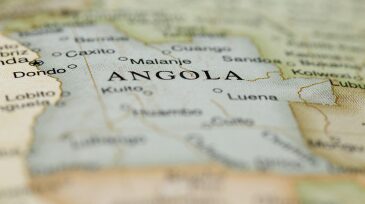
Angola’s Block 17 is nearing the end of one era of development and the beginning of its next.
-
Many problems that result in BOP downtime could be prevented if only drilling contractors knew which parts of the subsea system to replace and when. BOP monitoring systems have been developed to increase reliability by enabling preventive maintenance.
-
During OTC in Houston last month, offshore construction capabilities drew a room-capacity audience to a technical session about advances in deepwater construction techniques and vessels, including pipelaying and heavy lifting.
-
A previous attempt to drill an exploration well in ultradeep water in the Gulf of Mexico (GOM) did not reach its objective.
-
This paper discusses the keys to the successful delivery and well productivity of the first seven of 40 planned wells of the BP's PSVM development.
-
The Papa-Terra field in the Campos basin in Brazil is identified as having an oil interval of 14.6°API in turbidite sandstones.
-
This paper explores the interplay between field development and lifecycle reservoir management.
-
In the kingdom of wet completion, Petrobras has just installed its first tension-leg wellhead platform, in the field of Papa Terra in 1190-m-deep water. It is going to be a revolution regarding how to operate such an installation and be able to produce the heavy oil of Papa Terra (14–17°API).
-
Linhua4-1 was China’s first tieback subsea development project. To develop this marginal oil field, a number of technical challenges were overcome through a series of new technologies, and their successful development and implementation.