AI/machine learning

This research focuses on combining physics-based expert rules with machine learning to improve the detection of failure-related events in electrical submersible pumps.

A combination of physics principles and machine-learning techniques is used in this work to develop a virtual flowmeter for oil-production optimization in electrical-submersible-pump-lifted oil wells, resulting in reliable generalization.

This paper presents the deployment of an artificial intelligence-enabled autonomous gas lift optimization system, integrating real-time centralized advanced process control with cloud-based analytics to enhance artificial gas lift performance in producer wells.
-
 So far, digital twins have focused mainly on mimicking small, well-defined systems. Integrated asset models, however, tend to address the bigger picture. In this video, Distinguished Lecturer Kristian Mogensen addresses whether we can take the best from both worlds, whether we need to, and how to go about developing such a technical solution.
 -
New research led by the University of Glasgow’s School of Psychology and Neuroscience presents an approach to understand whether the human brain and deep neural networks recognize things in the same way.
-
Founded by former analytics experts for a large US independent, Xecta Digital Labs is proposing a new analysis method for horizontal wells. Adopting it means turning the page on some old habits.
-
The authors of this paper develop a model that can predict well-risk level and provide a method to convert associated failure risk of each element in the well envelope into a tangible value.
-
This paper presents agile technologies that integrate data management, data-quality assessment, and predictive machine learning to maximize asset value using underused legacy core data.
-
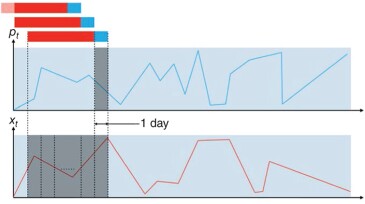
The authors of this paper propose a novel approach to data-driven modeling for transient production of oil wells.
-
Peter Bernard, CEO of Datagration, discusses how oil and gas industry predictive maintenance doesn’t just provide an economic value, it also boosts safety by anticipating unpredicted failures among aging infrastructure.
-
Geolog and Petro.ai announced a strategic partnership to deliver data science products and services to the global energy industry.
-
With so much volatility in the sector, acutely felt by many western consumers, how are intelligent work flows enabling the shift toward alternatives?
-
Incorporating domain knowledge into your architecture and your model can make it a lot easier to explain the results, both to yourself and to an outside viewer. Every bit of domain knowledge can serve as a stepping stone through the black box of a machine learning model.