AI/machine learning

Aurora Innovation and Detmar Logistics have inked a deal for 30 autonomous trucks that will begin hauling sand in the region next year.

Sustainability in reservoir management emerges not from standalone initiatives but from integrated, data-driven workflows, where shared models, closed-loop processes, and AI-enabled insights reduce fragmentation and make sustainable performance a natural outcome.

Sponsored
In oil and gas operations, every decision counts. For more than 2 decades, SiteCom has been the trusted digital backbone for well operations worldwide, driving insight, collaboration, and efficiency.
-
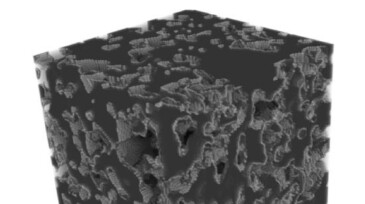
 This paper presents a novel modeling framework for predicting residual oil saturation in carbonate rocks. The proposed framework uses supervised machine learning models trained on data generated by pore-scale simulations and aims to supplement conventional coreflooding tests or serve as a tool for rapid residual oil saturation evaluation of a reservoir.
 -
You’ve heard of generative artificial intelligence, and odds are you’ve used it. But do you know how it works?
-
The firm’s latest report, Leading a Data-Driven Transition, presents the results of its annual survey of nearly 1,300 senior professionals and divides the respondents into two groups, which it calls “digital leaders” and “digital laggards.”
-
The industry is balancing brains and bots as it squeezes out barrels of oil production.
-
Energy efficiency is crucial for the oil and gas industry, where operational costs and environmental impact are under constant scrutiny. Predicting and managing electrical consumption and peak demand accurately, especially with the variability of weather conditions, is a significant challenge. This work presents a neural network model trained on historical weather and…
-
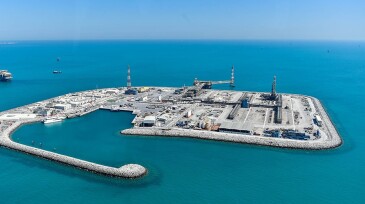
The company says the field has achieved a 25% production capacity increase through the user of advanced digital technology.
-
This study compares seven imputation techniques for predicting missing core-measured horizontal and vertical permeability and porosity data in two wells drilled in the North Rumaila oil field in southern Iraq.
-
This paper describes an approach that combines rock typing and machine-learning neural-network techniques to predict the permeability of heterogeneous carbonate formations accurately.
-
This study describes the performance of machine-learning models generated by the self-organizing-map technique to predict electrical rock properties in the Saman field in northern Colombia.
-
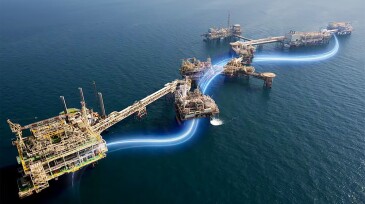
Implemented for the first time offshore, the technology uses artificial intelligence to operate wells autonomously.