AI/machine learning

This research focuses on combining physics-based expert rules with machine learning to improve the detection of failure-related events in electrical submersible pumps.

A combination of physics principles and machine-learning techniques is used in this work to develop a virtual flowmeter for oil-production optimization in electrical-submersible-pump-lifted oil wells, resulting in reliable generalization.

This paper presents the deployment of an artificial intelligence-enabled autonomous gas lift optimization system, integrating real-time centralized advanced process control with cloud-based analytics to enhance artificial gas lift performance in producer wells.
-
 Technology uptake aimed at optimizing resources, delivering consistency, and augmenting what humans can do.
 -
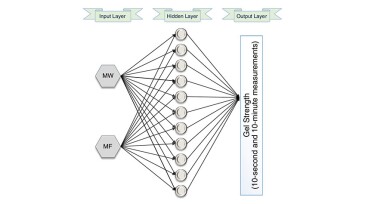
This paper investigates the use of machine-learning techniques to forecast drilling-fluid gel strength.
-
Machine learning and a decade of gas composition records helped the operator identify wells that were most likely to produce paraffins.
-
The companies plan to develop new artificial-intelligence-powered processes and workflows to optimize oil and gas production.
-
Routine status reporting often presents a challenge because of its intimidating and time-consuming nature for both employees and supervisors. With large language models, a system was developed to generate coherent artificial-intelligence-driven reports. The goal is to enhance the understanding of overall insights and reduce the time required for individual report read…
-
This paper aims to emphasize the importance of decision-making based on quantitative monitoring outputs, from both a business perspective and an ecosystem-service perspective, in future offshore projects.
-
Experts at SPE’s Annual Technical Conference and Exhibition say that despite AI’s great potential, it’s important to be realistic about AI’s capabilities and to remember that successful projects solve specific business problems.
-
This paper presents the processes of identifying production enhancement opportunities, as well as the methodology used to identify underperforming candidates and analyze well-integrity issues, in a brownfield offshore Malaysia.
-
This paper delves into the evolving landscape of drilling automation, emphasizing the imperative for these systems to go beyond novelty and deliver quantifiable financial value.
-
This paper presents a workflow that combines probabilistic modeling and deep-learning models trained on an ensemble of physics models to improve scalability and reliability for shale and tight-reservoir forecasting.