AI/machine learning

This research focuses on combining physics-based expert rules with machine learning to improve the detection of failure-related events in electrical submersible pumps.

A combination of physics principles and machine-learning techniques is used in this work to develop a virtual flowmeter for oil-production optimization in electrical-submersible-pump-lifted oil wells, resulting in reliable generalization.

This paper presents the deployment of an artificial intelligence-enabled autonomous gas lift optimization system, integrating real-time centralized advanced process control with cloud-based analytics to enhance artificial gas lift performance in producer wells.
-
 In this work, novel physics-based models and machine-learning models are presented and compared for estimating permanent-downhole-gauge measurements.
 -
The AIoT has the potential to transform industries and society, and it is already starting to have an impact. This article will explore the principles of AIoT, its benefits, and its current use.
-
Supervised learning has many commercial applications; however, such learning lacks the capability to generate new insights and knowledge. In contrast, unsupervised learning discovers the inherent structures in unlabeled data, thereby helping generate new insights and actionable knowledge from large volumes of data.
-
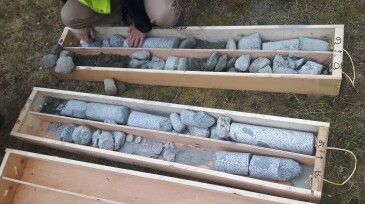
Researchers from Skoltech have trained a neural network to recognize rock samples in core box images efficiently. The process has sped up analysis by up to 20 times and made it possible to automate the description of rock samples.
-
Chief digital and information officer Sandeep Gupta's innovative use of technology has enabled the company to cut costs, reduce time to first oil, and manage decline in production.
-
The paper describes an approach to history matching and forecasting that does not require a reservoir simulation model, is data driven, and includes a physics model based on material balance.
-
The collaboration is planned to explore artificial intelligence in an effort to get more value from oil and gas operations and create a sustainable and carbon-efficient future for the energy industry.
-
Accenture research suggests that only 12% of companies have advanced their AI maturity enough to achieve superior growth and business transformation. These companies are "AI Achievers" and, on average, attribute 30% of their total revenue to AI.
-
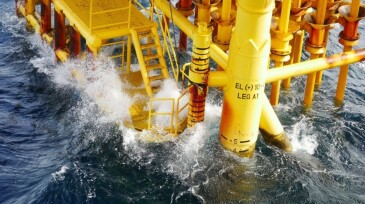
Their model’s predictions should help researchers improve ocean climate simulations and hone the design of offshore structures.
-
The paper describes the experience of using a machine-learning model prepared by the ensemble method to prevent stuck-pipe events during well construction in extended-reach wells.