AI/machine learning

After years of market shocks, technological breakthroughs, and rising uncertainty, ATCE 2026 will provide new insights on how industry leaders and technical experts are preparing for the next era of the upstream business.

This research focuses on combining physics-based expert rules with machine learning to improve the detection of failure-related events in electrical submersible pumps.

A combination of physics principles and machine-learning techniques is used in this work to develop a virtual flowmeter for oil-production optimization in electrical-submersible-pump-lifted oil wells, resulting in reliable generalization.
-
 The authors present a review of the capabilities of fog computing and its potential in the petroleum industry.
 -
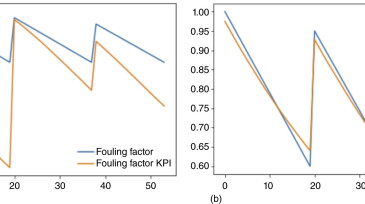
The machine-learning techniques applied aim to deliver a prediction model based on both simulation and real-time field data. The model tracks and monitors system key performance indicators.
-
SponsoredAI can improve your compliance efforts, saving you time and money. Learn how.
-
The authors present an artificial-intelligence and machine-learning technology to obtain a high-level, comprehensive view of all equipment in a facility to detect and map corrosion.
-
This paper provides an alternative solution to identifying, classifying, and vertically distributing fractures and a lateral distribution method for reservoir modeling.
-
The paper demonstrates the ability of deep-learning generative models to enable new shale-characterization methods.
-
This paper describes a method to determine rig state from camera footage using machine-learning-based vision-analytics approaches.
-
This paper describes the current challenges faced by energy companies, the implications of observable industry trends, the characteristics that potential cybersecurity solutions must meet, and how artificial intelligence (AI) and machine learning (ML) can meet these requirements.
-
The machine-learning techniques applied in this study aim to deliver a fouling-prediction model based on both simulation and real-time field data.
-
The register aims to help the maritime industry embrace technology advances in artificial intelligence.