AI/machine learning

Case studies from Devon Energy, ConocoPhillips, and others show how clever engineering and technology are being used to improve recovery and asset value.

This case study from Tomax outlines the use of artificial intelligence to analyze high-fidelity data of the full drilling process.

This study demonstrates the transformative potential of physics-informed neural networks as a hybrid framework for multiphase flow measurement.
-
 The software that the duo is working on aims to optimize and automate the moving of drilling rigs.
-
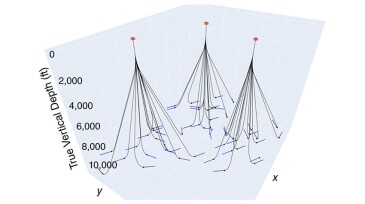
This paper presents an approach to optimize the location of wellhead towers using an algorithm based on multiple parameters related to well cost.
-
We must admit that the oil field is still in the early days of its digital journey. It’s time to give serious thought to the expectation/reality gap, the cultural differences between the way we’ve always done things and the way that digital is changing us, and the pain points that may trip us up unless we’re careful.
-
The authors of this paper describe a procedure that enables fast reconstruction of the entire production data set with multiple missing sections in different variables.
-
This paper presents a physics-assisted deep-learning model to facilitate transfer learning in unconventional reservoirs by integrating the complementary strengths of physics-based and data-driven predictive models.
-
Machine learning has been shown to have a promising role in oil and gas explorations in recent years. Among the applications, determining a proper location for injection and production wells along with their optimal operating conditions is a complex problem.
-
This article explains what deep learning is and how it works and presents an example use case from the energy industry.
-
The agreement will put SLB’s Delfi software to work in Ineos’ oil and gas operations.
-
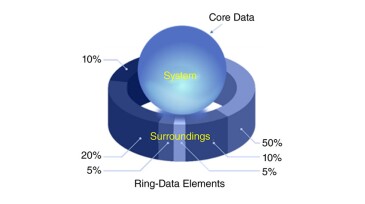
The authors of this paper describe a technology built on a causation-based artificial intelligence framework designed to forewarn complex, hard-to-detect state changes in chemical, biological, and geological systems.
-
This paper presents a family of machine-learning-based reduced-order models trained on rigorous first-principle thermodynamic simulation results to extract physicochemical properties.