AI/machine learning

Chevron and Halliburton describe how they built and deployed the fully autonomous closed-loop fracturing system that enables subsurface-driven optimization.
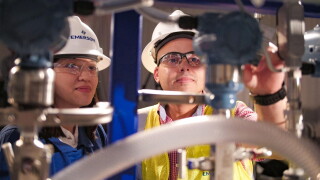
Aramco says it has saved $770 million over the past 3 years from the $70 million it has invested over the same period in corrosion management technologies.

The deal adds physics-based reservoir modeling and real-time decision workflows to SLB’s digital portfolio.
-
 Wintershall Dea set out to demystify digital for engineers with an informal network of staff experts who help fill the gaps in this new way of doing things and have a focus on maximizing the return on problems previously solved.
 -
In the spectrum of artificial intelligence (AI) technologies, those adopted to date in the oil and gas industry are task-focused, narrow applications. Taking AI to the next level cannot be done by Silicon Valley alone.
-
In the complete paper, the authors generate a model by using an artificial-neural-network (ANN) technique to predict both capillary pressure and relative permeability from resistivity.
-
ODDS—organization, due diligence, data, and scrub. These four important steps can make sure you are ready to implement artificial intelligence in a way that leads to a successful project.
-
The Abu Dhabi National Oil Company announced that it has completed the first phase of its large-scale multiyear predictive maintenance project, which aims to maximize asset efficiency and integrity across its upstream and downstream operations.
-
Phase 1 covers the modeling and monitoring of assets for six ADNOC Group companies. The four phases of the project are expected to be completed by 2022.
-
SponsoredWith an intense focus on improving returns and cash flow, oil and gas producers need step-change improvement in managing production versus plan. Embracing AI is critical to overcoming today's tools that largely fall short of achieving that ultimate goal.
-
The agreement signed by Schlumberger, AIQ, and Group 42 is designed to develop and commercialize artificial intelligence for global exploration and production.
-
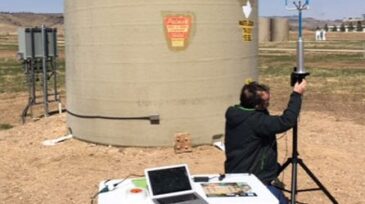
A new study confirms the success of a natural-gas leak-detection tool pioneered by Los Alamos National Laboratory scientists that uses sensors and machine learning to locate leak points at oil and gas fields, promising new automatic, affordable sampling across a vast natural gas infrastructure.
-
The oil and gas industry has picked up on the benefits of digitization and artificial intelligence in its day-to-day activities, and the health, safety, and environment sector is no exception. While AI brings clear benefits, the risks that come with those benefits remain unclear.