AI/machine learning

Schneider Electric says the deal advances its vision of creating intelligent industrial ecosystems that connect physical assets with digital insights across the asset life cycle.

This work describes a study in which distributed data parallel training, paired with a node-local caching pipeline, enabled efficient multigraphics-processing-unit scaling for a CO₂-storage graph-neural-network surrogate while maintaining generalization.

This paper presents a novel reservoir engineering/reservoir simulation approach—a data-driven interwell-connectivity model augmented as a digital twin—to predict reservoir dynamics and optimize operations in the Changqing oil field of China.
-
 Major increases in hydrocarbon production require both incremental and revolutionary technologies, industry leaders said during the SPE Hydraulic Fracturing Technology Conference.
 -
This paper presents an automated workflow deployed for scheduling and validating steady-state production-well tests across more than 2,300 wells in the Permian Basin.
-
This paper presents a multifaceted approach leveraging precise rig control, physics models, and machine-learning techniques to deliver consistently high performance in a scalable manner for sliding.
-
This guest editorial explores the rise of agentic AI and its potential effect on oil and gas professionals.
-
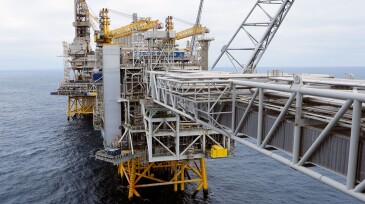
The Norwegian major said it is using artificial intelligence for predictive maintenance throughout its facilities and for interpretation of seismic data from the Norwegian continental shelf.
-
This paper explores the evolving role of the digital petroleum engineer, examines the core technologies they use, assesses the challenges they face, and projects future industry trends.
-
This paper describes an auto-adaptive workflow that leverages a complex interplay between machine learning, physics of fluid flow, and a gradient-free algorithm to enhance the solution of well-placement problems.
-
This paper presents a novel application of artificial intelligence in computer vision for automating blowout-preventer pressure-chart-data extraction, demonstrating significant efficiency gains and a high return on investment.
-
Are we in an AI bubble? The question may seem academic to petroleum engineers who are already capitalizing on the momentum of digitalization across the industry, yet any engineer, regardless of their career stage, could be forgiven for feeling overwhelmed by the sheer scope of specialized skills now demanded in this rapidly evolving digital landscape.
-
This work presents the development of fast predictive models and optimization methodologies to evaluate the potential of carbon-dioxide EOR and storage operations quickly in mature oil fields.