AI/machine learning

Chevron and Halliburton describe how they built and deployed the fully autonomous closed-loop fracturing system that enables subsurface-driven optimization.
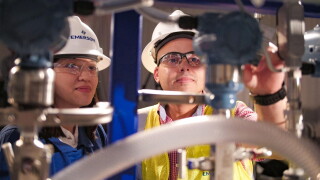
Aramco says it has saved $770 million over the past 3 years from the $70 million it has invested over the same period in corrosion management technologies.

The deal adds physics-based reservoir modeling and real-time decision workflows to SLB’s digital portfolio.
-
 BHGE is developing an analytics and machine-learning approach that offers descriptive and predictive insights on frac hits, with the aim of eventually offering a real-time monitoring capability to be deployed during frac jobs.
 -
The international major has been playing with intelligent programs for years, but this new deal shows that it is now ready to scale those efforts up to cover hundreds of thousands of pieces of equipment.
-
This paper demonstrates the viability of a production-data-classification approach adapted from real-time face detection for identifying restimulation candidates.
-
BP has invested more than $100 million into nine different startup companies in the past 2 years—but only one of them wants to turn your brain into a piece of its software.
-
A new detection and alerting methodology, validated on more than 100 North America onshore wells, blends well information and real-time data to determine a probabilistic belief system. An operator used the system to detect, predict, and alert rig crews to washouts and pump failures.
-
Unstructured data, such as process logs, safety reports, and public records, make up the bulk of data produced from the oil field. Emerging NLP technology has been designed to help make sense of this data, enabling better insights into near-accidents.
-
DNV GL has published a paper to support the safe use of artificial intelligence. The paper asserts that data-driven models alone may not be sufficient to ensure safety and calls for a combination of data and causal models to mitigate risk.
-
Machine learning and artificial intelligence technology offer offshore operators the chance to automate high-cost, error-prone tasks to avoid the effects of inconsistency and errors in analysis, improving efficiencies and safety.
-
Technologies are being developed that have the potential to support marine mining in all stages from prospection to decommissioning. These developments will likely have substantial influence in the oil and gas industry, itself searching for ways to maximize exploitation of assets.
-
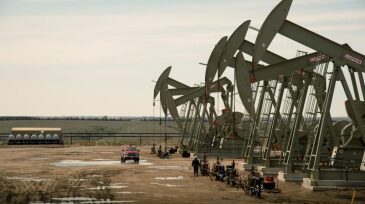
Hundreds of rod-lift wells in North Dakota are about to get a big upgrade.