AI/machine learning

As digital technologies become commonplace, industry leaders say core engineering knowledge remains essential for making informed decisions and avoiding costly mistakes.

The deals, with a potential value exceeding $3.7 billion, are aimed at strengthening Saudi Aramco’s supply chains and expanding its use of industrial artificial intelligence.

This work applies fuzzy logic, a well-established artificial-intelligence technique, to quantitatively assess connectivity between injectors and producers in a giant presalt field in the Santos Basin of Brazil.
-
 Accuracy, complexity, costs, and skills availability may make it difficult to get the most out of digital twins and even potentially misrepresent or miss actual changes in the status of systems or facilities.
 -
The new contract extends a decadelong relationship and expands the use of AI and digital twins.
-
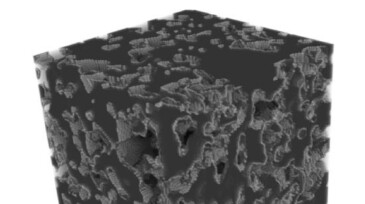
This paper presents a novel modeling framework for predicting residual oil saturation in carbonate rocks. The proposed framework uses supervised machine learning models trained on data generated by pore-scale simulations and aims to supplement conventional coreflooding tests or serve as a tool for rapid residual oil saturation evaluation of a reservoir.
-
You’ve heard of generative artificial intelligence, and odds are you’ve used it. But do you know how it works?
-
The firm’s latest report, Leading a Data-Driven Transition, presents the results of its annual survey of nearly 1,300 senior professionals and divides the respondents into two groups, which it calls “digital leaders” and “digital laggards.”
-
The industry is balancing brains and bots as it squeezes out barrels of oil production.
-
Energy efficiency is crucial for the oil and gas industry, where operational costs and environmental impact are under constant scrutiny. Predicting and managing electrical consumption and peak demand accurately, especially with the variability of weather conditions, is a significant challenge. This work presents a neural network model trained on historical weather and…
-
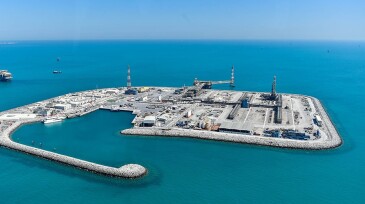
The company says the field has achieved a 25% production capacity increase through the user of advanced digital technology.
-
This study compares seven imputation techniques for predicting missing core-measured horizontal and vertical permeability and porosity data in two wells drilled in the North Rumaila oil field in southern Iraq.
-
This paper describes an approach that combines rock typing and machine-learning neural-network techniques to predict the permeability of heterogeneous carbonate formations accurately.