AI/machine learning

As digital technologies become commonplace, industry leaders say core engineering knowledge remains essential for making informed decisions and avoiding costly mistakes.

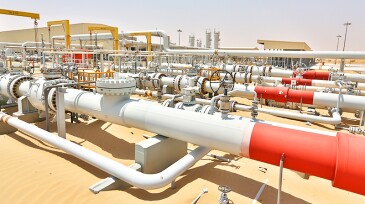
The deals, with a potential value exceeding $3.7 billion, are aimed at strengthening Saudi Aramco’s supply chains and expanding its use of industrial artificial intelligence.

This work applies fuzzy logic, a well-established artificial-intelligence technique, to quantitatively assess connectivity between injectors and producers in a giant presalt field in the Santos Basin of Brazil.
-
 In the pursuit of sustainable industrial operations, three pivotal objectives emerge: risk reduction, safety assurance, and cost minimization. Integrating these objectives into digital transformation strategies enables operators to effectively manage emissions and achieve success.
 -
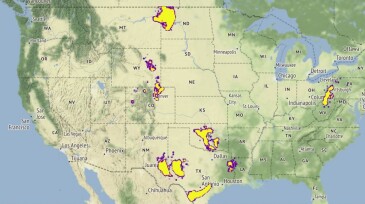
Supervised learning was used to develop an ensemble of models that account for historical production data, geolocation parameters, and completion parameters to forecast production behavior of oil and gas wells.
-
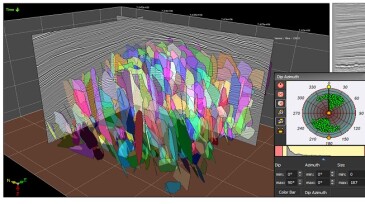
The combined effort aims to reduce the time necessary for and increase the detail and accuracy of seismic interpretation, including for carbon sequestration studies.
-
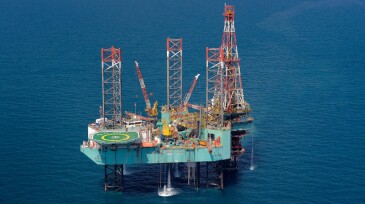
The national oil company credits lean operating practices and AI for making the three-well, 45,000 B/D project economically viable.
-
From the first supercomputer to generative AI, JPT has followed the advancement of digital technology in the petroleum industry. As the steady march of innovation continues, four experts give their views on the state and future of data science in the industry.
-
The act aims to create safeguards around general purpose artificial intelligence, limit the use of biometric identification systems by law enforcement, and ban social scoring the untargeted scraping of facial images from CCTV footage to create facial recognition databases.
-
More than two dozen artificial intelligence systems are being celebrated for delivering massive value to the national oil company.
-
The company says it has used more than 30 AI tools to unlocked significant value across its full value chain.
-
This paper presents an approach using artificial neural networks to predict the discharge pressure of electrical submersible pumps.
-
SEG and SPE join forces to offer access to a robust research portal that harnesses the power of AI and ML.