AI/machine learning

Known as Arena, the collaboration aims to improve decision-making across increasingly complex reservoirs and growing volumes of subsurface data.

Robotic and autonomous systems are transforming energy operations, but their full value emerges only when paired with data science, engineering analytics, and AI/ML to turn data into decisions. The transition of the SPE Robotic & Autonomous Systems Technical Section into the SPE Data Science & Engineering Analytics Technical Section helps bridge this critical technolo…
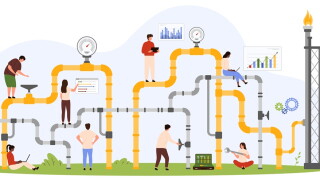
A credible custody-transfer record depends on far more than the accuracy of a single meter. It is the product of an integrated measurement chain. While meter performance supports measurement-system integrity, commercial confidence also depends on traceability, governance, and authorization.
-
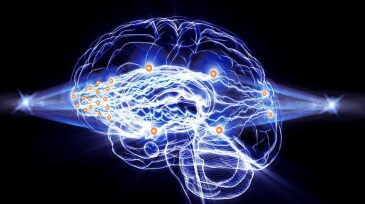
 Even the most powerful computers are still no match for the human brain when it comes to pattern recognition, risk management, and other similarly complex tasks. A new approach, however, could enable parallel computation with light, simulating the way neurons respond in the human brain.
-
Artificial intelligence tools present many opportunities for the energy industry, and, as technological concepts leave the realm of science fiction, companies have started to grasp what is possible. What roles do culture and ethics play in helping companies understand the digital revolution?
-
This paper highlights the results of a test campaign for a tool designed to predict the short-term trends of energy-efficiency indices and optimal management of a production plant.
-
Recently, AI researchers from Microsoft open-sourced the Decentralized & Collaborative AI on Blockchain project that enables the implementation of decentralized machine-learning models based on blockchain technologies.
-
Baker Hughes is still a GE company, but it has partnered with a second company for artificial intelligence expertise, C3.ai. The deal is expected to speed the integration of AI into oilfield operations by the company which also markets GE’s device analytics platform, Predix.
-
Baker Hughes, a GE company, (BHGE) and C3.ai announced a joint venture agreement that brings together BHGE’s fullstream oil and gas expertise with C3.ai’s unique artificial-intelligence software suite to deliver digital transformation technologies and drive productivity for the oil and gas industry.
-
Researchers at the University of Massachusetts, Amherst, performed a life-cycle assessment for training several common large AI models. They found that the process can emit more than 626,000 lbm of carbon dioxide equivalent—nearly five times the lifetime emissions of the average American car.
-
Random Forest and Neural Network are the two widely used machine-learning algorithms. What is the difference between the two approaches? When should one use Neural Network or Random Forest?
-
Malaysia’s Petronas, Shell Malaysia, and Thailand’s PTTEP are now in the midst of full-scale digital adoption. The companies are beginning to see results, but none is counting on a “big bang” in development of the technology soon.
-
The algorithms for running AI applications have been so big that they’ve required powerful machines in the cloud and data centers, making many applications less useful on smartphones and other edge devices. Now, that concern is quickly melting away, thanks to a series of recent breakthroughs.