Artificial lift

Unlike traditional AI approaches that rely primarily on historical data, physics-based AI integrates physical laws, engineering expertise, and operational constraints directly into the learning process. Three recent SPE papers illustrate how this paradigm is transforming the industry through intelligent condition monitoring, virtual sensing, and autonomous production …

This research focuses on combining physics-based expert rules with machine learning to improve the detection of failure-related events in electrical submersible pumps.

A combination of physics principles and machine-learning techniques is used in this work to develop a virtual flowmeter for oil-production optimization in electrical-submersible-pump-lifted oil wells, resulting in reliable generalization.
-
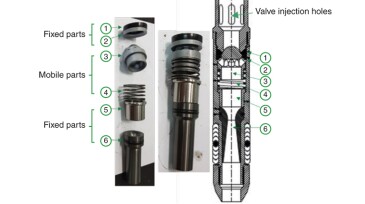
 This paper describes a comprehensive approach to mitigate systemic failure in gas-lift valves in presalt wells.
 -
This paper describes a study aiming to provide input for the well-completion-strategy design and operational parameters for a carbonate reservoir experiencing electrical-submersible-pump failures.
-
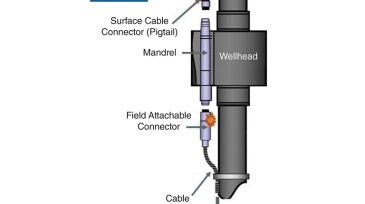
This paper describes the findings of a root-cause analysis of wellhead-penetrator failures in Canadian steam-assisted gravity-drainage operations and the mitigation measures taken.
-
This paper discusses the field implementation of a downhole chemical methodology that has positively affected overall productivity for a mature Kuwait field.
-
SponsoredRod lift failure frequency in horizontal wells drives significant operating expenses. Understanding why these failures occur leads to a solution — production optimization with automated setpoint changes, which can extend the life of this equipment and reduce downtime.
-
This paper describes an artificial-lift technology, a subsurface compressor system, that simultaneously removes liquids, increases gas production, and improves recoverable reserves in gas wells.
-
The way gas injection is used to lift oil and water to the surface needs to change because better control and data may mean more production. At a time when engineers are managing so many wells, they need help from machines.
-
Getting more out of gas lift requires understanding how gas injections interact with the oil, water, and gas flowing up the well—in other words, multiphase flow. Some papers are listed to get you started.
-
Economical oil extraction depends largely on reducing wear and tear of downhole equipment and tubulars through regular monitoring and batch treatment to cut the risk of corrosion and costly workovers. Having a data-driven approach to scheduling batch treatment can bring down the frequency of treatment and avoid the unnecessary use of resources.
-
Artificial lift really shines during a downturn. This is because, when capital spending is constrained, artificial lift is one of the few levers an operator has available to increase production while reducing operating expenses.