Artificial lift

Honorees Rajan Chokshi and Mike Poythress say the guidance they received, and later shared with others, helped shape decades of innovation and leadership in artificial lift.

As digital technologies become commonplace, industry leaders say core engineering knowledge remains essential for making informed decisions and avoiding costly mistakes.
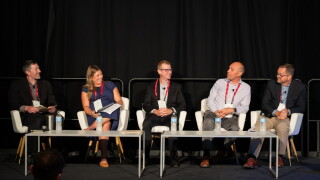
While equipment run life and reliability remain core concerns, experts say operators are increasingly turning to real-time surveillance and autonomous optimization to unlock new production gains.
-
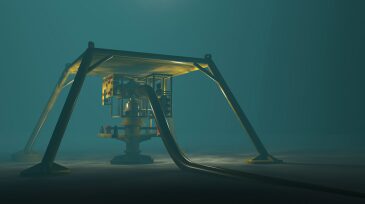
 The motto of the Olympic Games is “Citius, Altius, Fortius,” Latin for “faster, higher, stronger,” which emphasizes the concept of pushing the limits. As an engineer, that approach really speaks to me—and offshore installations, and especially offshore tiebacks, illustrate that concept very well.
 -
Eni conducted a research project to explore the maturity of new technologies to enable economical development of deepwater prospects with tieback distances longer than 50 km and 150 km, respectively, for oil and gas fields.
-
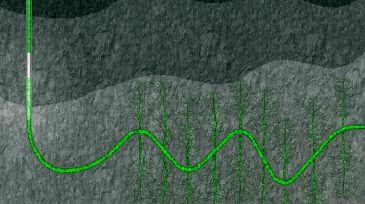
SponsoredLiquid loading is declining the production rates and limiting the ultimate recovery of shale gas wells. This article explains how subsurface compression can remove liquids from the horizontal and vertical wellbores and increase one operator’s production by 67%.
-
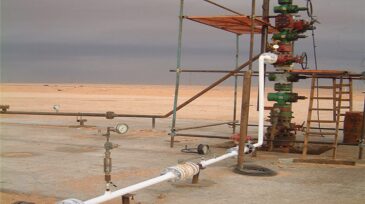
Hassi Messaoud is a mature oil field with more than 1,100 production wells. Approximately half of the wells are natural flow and the other half use continuous gas lift (CGL) with concentric (CCE) strings.
-
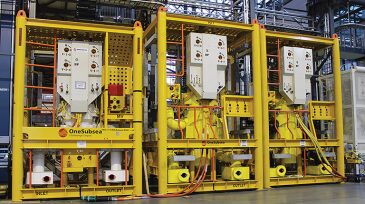
The first subsea multiphase boosting system was installed in 1994. Since then, it has grown into a technology with a global track record.
-
Using maglev technology, a new artificial lift system seeks to boost production output by sucking down reservoir pressure from inside the wellbore and from inside the reservoir.
-
Permian Basin operators and service companies met to discuss completions diagnostics, flowback strategies, water management, and artificial lift strategies.
-
This paper presents an analytics solution for identifying rod-pump failure capable of automated dynacard recognition at the wellhead that uses an ensemble of ML models.
-
Aker Solutions and FSubsea have agreed to a joint venture, named FASTSubsea, to help operators increase oil recovery.
-
This paper covers the staged field-development methodology, including analysis and evaluation of various development concepts, that enabled the company to optimize both completion design and artificial-lift selection, reducing downtime and lowering operating costs by nearly 50%.