Business/economics

Technology and partnerships remain important, while phased approaches may supplant lengthy appraisal programs, experts said during CERAWeek.

Analysts weigh near‑term risks for Middle East oil and gas producers after a tentative 2‑week ceasefire between the US‑Israeli coalition and Iran.

The ASEAN Council of Petroleum and Energy and SPE have taken a step toward deeper regional collaboration, formalizing a Memorandum of Cooperation at OTC Asia 2026. The agreement signals a shared commitment to advancing energy security, sustainability, and technical excellence across ASEAN through expanded knowledge exchange and workforce development.
-
 The outlook for the US onshore oil business is looking better, which is not to say it is looking up. Recent surveys by the Federal Reserve banks of Kansas City and Dallas indicated the industry had stabilized after a long period in critical condition.
 -
The world’s developing countries will lead economic growth and consume an increasing share of energy production globally over the next quarter-century,according to Rob Gardner, manager of economics in corporate strategic planning at ExxonMobil.
-
Applying an economic analysis for Trinidad and Tobago's deepwater gas fiscal regime, results were calculated for various price scenarios to identify a workable strategy for development of offshore resources.
-
Schlumberger and Baker Hughes leaders said increased investments are critical to ensuring technological advancements for the industry.
-
Douglas-Westwood’s quarterly World Oilfield Services Market Forecast and World Oilfield Equipment Market Forecast continue to suggest that 2016 marks the start of a barren period for the global oilfield services and oilfield equipment sectors, with onshore looking more positive than offshore.
-
Mass layoffs and rising bankruptcies haven't put an end to abundant supplies.
-
A fairly stable set of conditions coalesce to make a strong reason to expect the oil price to range between USD 30/bbl to USD 60/bbl for the foreseeable future.
-
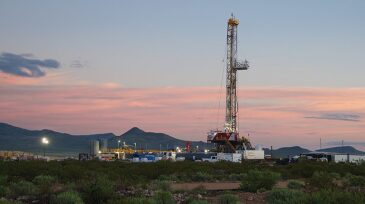
The US rig count has inched up recently, and the driver has been the old reliable of onshore oil production, the Permian Basin. With surging production, the Permian is the only major US oil shale play to grow since crude prices began to fall.
-
Iraq is producing oil at record levels this year but low oil prices have cast doubts on the economic feasibility of its licensing contracts, which some analysts and policy advisers say are holding back higher output.
-
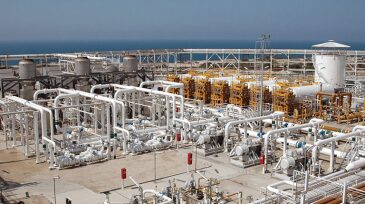
Iran has surprised many global market experts with how rapidly it has increased crude oil production, following the January international agreement that lifted nuclear-related sanctions against the country. External companies get a look at new terms for production in Iran.