Business/economics

A new licensing deal with ZL Chemicals will make Chevron’s unconventional EOR technology available to other tight-oil producers.

Crude benchmarks spiked amid concerns that the US-Iran ceasefire is collapsing as commercial shipping comes under renewed attack.

Schneider Electric says the deal advances its vision of creating intelligent industrial ecosystems that connect physical assets with digital insights across the asset life cycle.
-
 Douglas-Westwood’s quarterly World Oilfield Services Market Forecast and World Oilfield Equipment Market Forecast continue to suggest that 2016 marks the start of a barren period for the global oilfield services and oilfield equipment sectors, with onshore looking more positive than offshore.
 -
Mass layoffs and rising bankruptcies haven't put an end to abundant supplies.
-
A fairly stable set of conditions coalesce to make a strong reason to expect the oil price to range between USD 30/bbl to USD 60/bbl for the foreseeable future.
-
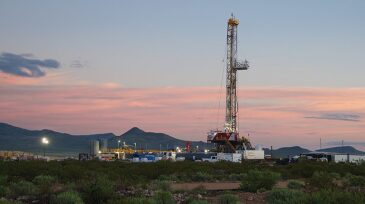
The US rig count has inched up recently, and the driver has been the old reliable of onshore oil production, the Permian Basin. With surging production, the Permian is the only major US oil shale play to grow since crude prices began to fall.
-
Iraq is producing oil at record levels this year but low oil prices have cast doubts on the economic feasibility of its licensing contracts, which some analysts and policy advisers say are holding back higher output.
-
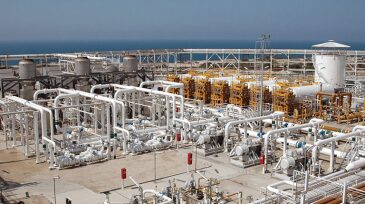
Iran has surprised many global market experts with how rapidly it has increased crude oil production, following the January international agreement that lifted nuclear-related sanctions against the country. External companies get a look at new terms for production in Iran.
-
By using a Bayesian network, a probabilistic graphical model, in their shale operations, companies might eliminate some of the hurdles they face in these areas, an expert said at the 2016 Unconventional Resources Technology Conference.
-
Merger and acquisition activity has been limited since prices started to fall in 2014. But there are signs that M&A activity may be building, and oil company management teams should think about which deal strategies they should pursue.
-
Shell has reaffirmed its commitment to the shale business and views it as a growth opportunity moving into the 2020s
-
As an example of an open system, the oil and gas market is a function of several external forces. Free market supply and demand may not yield a sustainable equilibrium price, but the deferral of capital projects will result in a lack of global supply in just a few years.