Business/economics

While often associated with smaller discoveries, subsea tiebacks are playing a growing role in contributing to the broader energy mix.

The Houston-based enhanced geothermal developer scored $1.9 billion in an initial public offering, positioning it to expand projects in Utah and Nevada.

Equinor generated its first revenue from the Adura joint venture with Shell, formed in late 2025, highlighting strong early cash flow from key UK fields including Mariner and Buzzard.
-
 Gulfport Energy is seeking to eliminate more than $1 billion in debt and to cancel or renegotiate firm transportation contracts that it said drove it to enter bankruptcy protection.
 -
Bonanza Creek plans to buy HighPoint Resources and said it hopes to maintain an output of 50,000 BOE/D by focusing only on drilled-but-uncompleted wells in the near term.
-
With the acquisition of Schlumberger’s rod lift business, Lufkin gains several products, brands, and key proprietary software.
-
To go big on capturing CO2, the oilfield service company is acquiring a company that specializes in going small.
-
Two contracts awarded for flowlines and wellheads at ADNOC’s Abu Dhabi oil fields are expected to be completed in 5 years. A third contract to develop a bypass system for its Jebel Dhanna and Fujairah terminals is expected to be completed in 30 months.
-
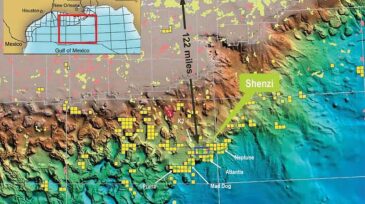
Hess Corp. sold its stake in the Shenzi development to BHP for $505 million to help pay its share of the cost of developing discoveries offshore Guyana.
-
Petrobras began negotiations with SBM Offshore to contract the floating production, storage, and offloading (FPSO) Almirante Tamandaré to be installed in the Búzios field in the Santos Basin.
-
More than half of the oil and gas production in the region is shut in.
-
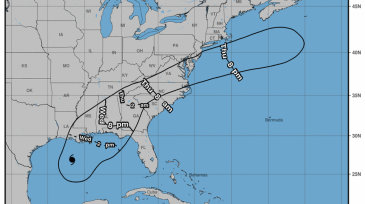
Hurricane Zeta is intensifying as it approaches the US Gulf of Mexico coast of southeastern Louisiana, where it is expected to make landfall around 4 p.m. CST today. View a video of Zeta posted by the US Air Reserve Hurricane Hunters.
-
Describing it as a “bolt-on” acquisition, the Marcellus Shale producer EQT expects the deal will boost its gas production by 10%.