Business/economics

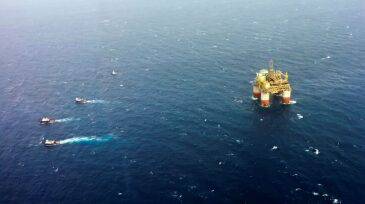
While often associated with smaller discoveries, subsea tiebacks are playing a growing role in contributing to the broader energy mix.

The Houston-based enhanced geothermal developer scored $1.9 billion in an initial public offering, positioning it to expand projects in Utah and Nevada.

Equinor generated its first revenue from the Adura joint venture with Shell, formed in late 2025, highlighting strong early cash flow from key UK fields including Mariner and Buzzard.
-
 In his first remarks as SPE President, Tom Blasingame announced that the theme of his tenure is “Survive, Revive, and Thrive.”
 -
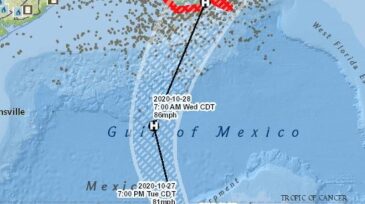
Evacuations in the GOM began on Monday, but so far nearly 50% of current oil production and 55% of natural gas production in the region is shut-in due to Tropical Storm Zeta.
-
The Canadian oil company consolidation formula looks a lot like the one offered by US shale producers.
-
In an updated projection, Rystad said that a breakeven of only $50/bbl is needed to produce 100 million BOPD in 2025, reflecting the reduction in oil-production costs.
-
In another all-stock transaction, one of the largest operators in the Permian Basin is set to add nearly 250,000 acres to its portfolio and swell oil production to more than 300,000 B/D.
-
Marking the end of a 2-year existence, Riviera is preparing for liquidation and dissolution. The sale of its upstream and midstream assets for $146 million will deliver a $1.35-per-share cash dividend to shareholders. By the end of this year, the company will cease to exist.
-
ConocoPhillips promised more than just growth and costs savings when it announced a deal to acquire Concho.
-
Forty-four percent of oil production and 30% of natural gas production remain shut in as operators return workers to offshore platforms. Production from undamaged facilities are being brought back online once all standard checks are completed. Facilities with damage may take longer to bring back up.
-
The majority of energy firms surveyed by the Federal Reserve Bank don’t expect the business environment to significantly improve until 2022 or 2023.
-
The deal includes Sandvik’s exploration rigs, consumables, production stock, and selected trademarks and patents.