Casing/cementing/zonal isolation

This paper presents a case study of oriented tubing-conveyed perforation followed by an acidizing operation to overcome technical challenges posed by a depleted reservoir targeted for a carbon capture, utilization, and storage project.

This paper describes the evolution of the operator’s initial PWC (perforate, wash, and cement) abandonment projects performed in deepwater Brazil.

The authors reach conclusions that the industry should define a standard testing method to improve swelling performance, including validation of repeatability, to complement existing guidelines.
-
 This paper describes a foamed cement solution designed and implemented to cement shallow intermediate casing strings in a heavy oil play in Northeast Alberta.
 -
This past year’s Cementing and Zonal Isolation papers indicated that our industry continues to maintain high levels of innovation and optimization. The evident collaboration between operators and service providers continues to propel technical developments at rates otherwise not possible.
-
This paper presents an evaluation of geopolymer cementing for use in oil and gas wells, specifically in the primary cementing of liner strings in the Permian Basin.
-
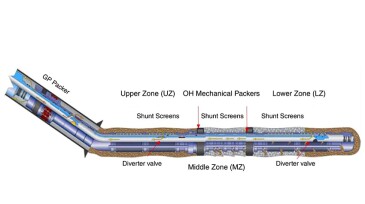
This paper presents the completion strategy implemented in an intelligent well completed in Malaysian deepwater Block K.
-
SponsoredExpanding its portfolio of high-tier technologies, TAQA develops a high-performance perforation-plugging patented product.
-
The effects of aging and temperature on the performance of one-part “just add water” granite based geopolymers are studied for application in well cementing and abandonment. Further studied is the role of zinc as a strength enhancer over a long curing period.
-
Casing deformations are common in the south-west shale regions of China and the Middle East, where the widespread use of 5.5-in., 26- and 26.8-lb/ft casing is the norm. In these regions, the majority of frac plugs are designed with an outer diameter (OD) of 4.055 in. or slightly larger, which frequently encounter restrictions resulting in the loss of bottomhole assemb…
-
SponsoredWith more surface facilities and infrastructure in oil and gas fields, well casing integrity is becoming an even bigger challenge. This article sheds light on the optimum way to deal with the increasing casing integrity challenges in the Middle East through field monitoring and time-lapse casing-integrity and corrosion-inspection logging.
-
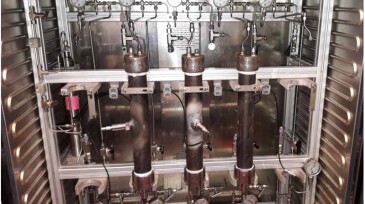
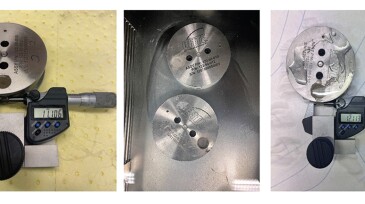
The authors discuss a modified ultrasonic-cement-analyzer (UCA) vessel that allows assessment of slurry sealing performance under representative downhole conditions while running otherwise standard UCA equipment.
-
This paper compares the sealability performance of an expanding geopolymer with that of an expansive commercial cement in terms of the shear bond strength and the hydraulic bond strength at curing conditions of 25℃ and 34.5 bar.