Completions

Three papers are highlighted as the primary contributions because of their broad industry relevance. They focus on improving formation particle-size characterization, expanding the application of openhole gravel packs in depleted and compartmentalized reservoirs, and advancing the understanding of capillary pressure in sand production.

This paper aims to establish a set of best practices for generating particle-size-distribution data from core samples.

This paper discusses the successful execution of two openhole gravel-pack completions in two Gulf of Mexico fields with depleted reservoirs.
-
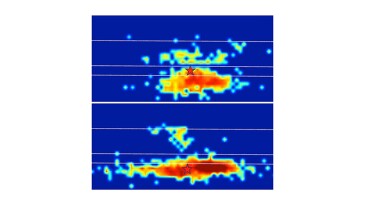
 In this work, microseismic observations are integrated with strain and other observations to investigate the microseismic response in relation to the underlying hydraulic fracture geometry for different rock types.
 -
This year’s Acidizing feature presents three SPE conference papers that discuss an important battlefront of enhanced production—carbonate reservoirs, those plays whose heterogeneity, reactivity, and flow behavior pose challenges that remain comparatively little-understood, despite the industry’s intensified efforts to maximize their output.
-
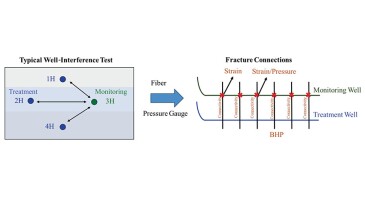
This work proposes a method to interpret far-field strain-change and pressure data to quantify fracture connectivity and properties at the cluster level.
-
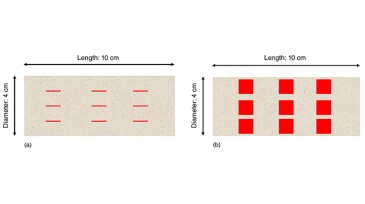
This paper extends an integrated two-scale continuum model that contemplates mass, momentum, and energy changes to study the acid-stimulation process in complex carbonate acid-stimulation systems with the development of fracture and vug networks.
-
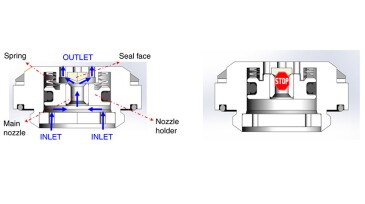
The authors of this paper write that autonomous outflow-control devices can positively affect matrix acidizing by providing the best possible conformance.
-
Each of these papers presented at SPE conferences exemplifies engineering solutions to maximize commercial value while retaining focus on HSE and service quality.
-
Modern completions often are equipped with downhole measurement devices that provide critical real-time data not only during the hydraulic fracturing treatment but also during the ensuing production phase.
-
New strides in computer vision, well controls indicators, and BOP alignment were showcased at the recent Offshore Technology Conference.
-
This paper describes the use of coiled tubing in a pilot project for carbon dioxide injection, enabling evaluation of the conversion of an existing oil field for CCS purposes and derisking storage-development uncertainties before having to cease hydrocarbon production.
-
This paper describes the first riserless coiled tubing services operation performed in a live subsea well and the associated improvements in efficiency, cost savings, and safety.